






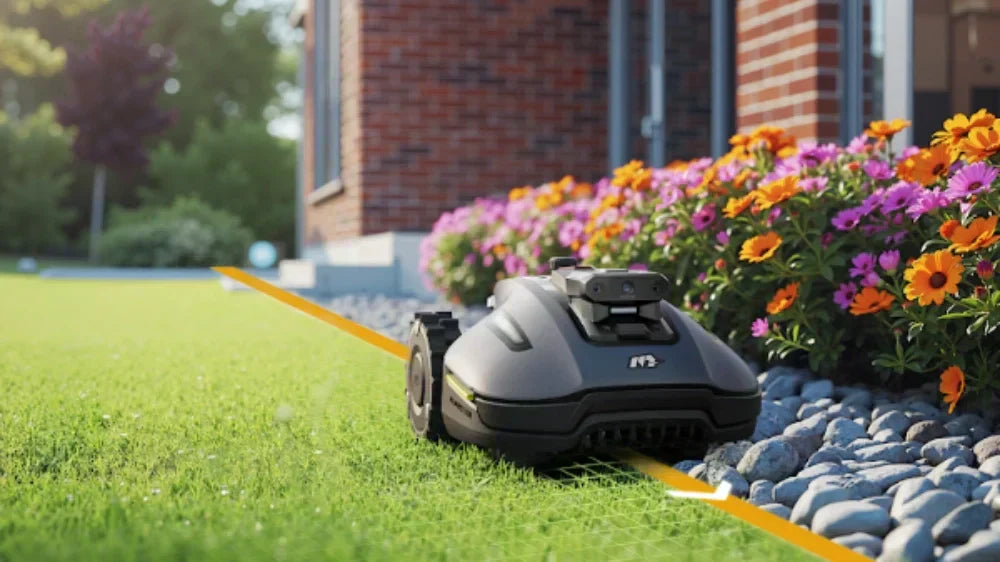
Small UK gardens present unique challenges that larger, wide-open spaces do not. We often deal with narrow side passages, intricate flower borders, and the occasional stray garden gnome or pet toy. Standard "random bounce" robot lawn mowers simply won’t cut it here; you need a machine that understands the geometry of your space. Choosing the best robot lawn mower for small garden use isn't just about finding the smallest machine, but finding the one with the highest "IQ" to navigate your specific terrain.
The best robotic lawn mower for a small garden is one that offers a "wire-free" setup, high-precision navigation for tight corners, and intelligent obstacle avoidance to protect flower beds and garden furniture. For 2026, the Mammotion YUKA mini 2 series leads the market by replacing messy boundary cables with advanced navigation technology, making it the top choice for UK homeowners seeking a pristine lawn without the manual graft.
In this guide, we will break down the top contenders for 2026, comparing the latest AI-driven models against traditional market leaders to help you reclaim your weekends.
If you are already familiar with how to choose a robotic lawn mower for small gardens, please skip to Part 1.
Otherwise, we recommend starting with Part 2 to better understand the features of our four recommended models.
Part 1. Top 4 Robotic Lawn Mowers for Small Gardens Recommendations
Finding the right fit for a smaller plot requires balancing agility with intelligence. While a massive lawn might need raw speed, a British back garden often demands the ability to navigate around patio furniture, narrow side-returns, and steep ornamental banks.
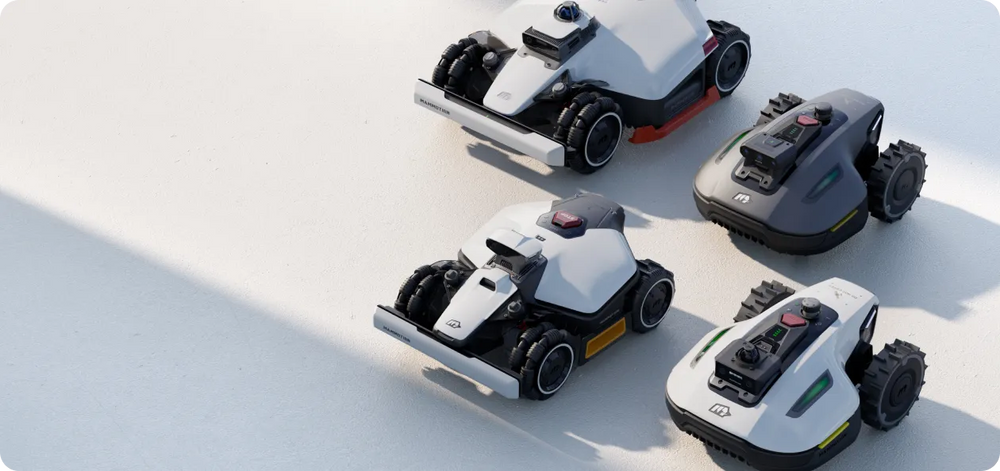
The top recommendations include the Mammotion YUKA mini 2 1000 and 800 for their wire-free AI navigation, the Gardena Sileno City 250 for ultra-quiet operation in tight residential areas, and the Stihl iMOW 3 EVO for those who prefer traditional engineering with enhanced connectivity. Below is a snapshot of how the leading models for 2026 compare:
1. Mammotion YUKA mini 2 1000: ⭐⭐⭐⭐⭐
2. Mammotion YUKA mini 2 800: ⭐⭐⭐⭐⭐
Quick Comparison Table
| Feature | YUKA mini 2 800 | YUKA mini 2 1000 | Gardena Sileno 250 | Stihl iMOW 3 EVO |
|---|---|---|---|---|
| Lawn Size | 800 m² | 1000 m² | Max. 250 m² | Max. 500 m² |
| Price | €999 | €1,299 | €670 | €1,606 |
| Navigation System | Triple-Camera AI Vision + NetRTK | 360° LiDAR + Dual-Camera AI Vision | Physical Boundary Wire | Physical Boundary Wire |
| Drive System | RWD | RWD | RWD | RWD |
| Maximum Climbing Ability | 45% (24°) | 45% (24°) | 35% | 45% |
| Battery Capacity | 4.5 Ah | 6.1 Ah | 2.1 Ah | 3 Ah |
| Weight | 10.6 kg | 10.9 kg | 7.3 kg | 10.6 kg |
| Cutting Height | 20–60 mm | 20–60 mm | 20–50 mm | 20–60 mm |
| Cutting Width | 190 mm | 190 mm | 160 mm | 200 mm |
| 4G Connectivity | Optional 4G module | Optional 4G module | No | Yes |
| Navigation Pattern | Planned Path | Planned Path | Random | Random |
| Obstacle Avoidance | AI Vision | AI Vision | None | None |
| Lawn Printing | Yes | Yes | No | No |
| Noise Level | 58 dB | 58 dB | 57 dB | 58 dB |
| Waterproof Rating | IPX6 | IPX6 | IPX5 | IPX5 |
| Rain Detection | Yes | Yes | No | No |
| Yard Monitoring | 720p (Wi-Fi) | 720p (Wi-Fi) | No | No |
| Mowing Area / Charge | 200 m² | 250 m² | Up to 250 m² (Day) | 75 m² |
| Charging Time (min) | 120 | 135 | 75 | 85 |
| Mowing Time (min) | 120 | 135 | 70 | 55 |
| Warranty | 3 years | 3 years | 2 years | 2 years |
| Rating | ⭐⭐⭐⭐⭐ | ⭐⭐⭐⭐⭐ | ⭐⭐⭐⭐ | ⭐⭐⭐ |
Data as of April 13, 2026. For the most up-to-date product information, please refer to our official website.
1. Mammotion YUKA mini 2 1000-1000 m² Lawn

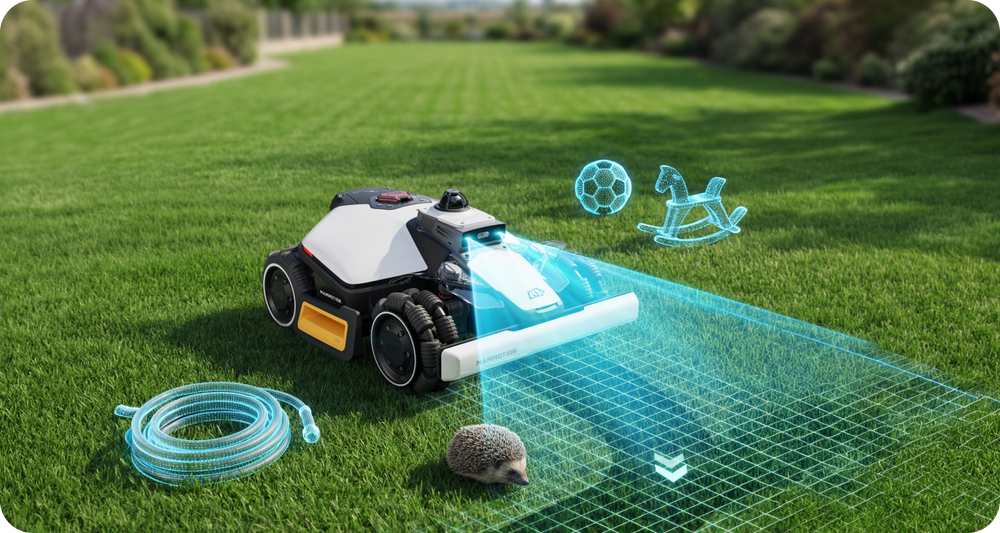
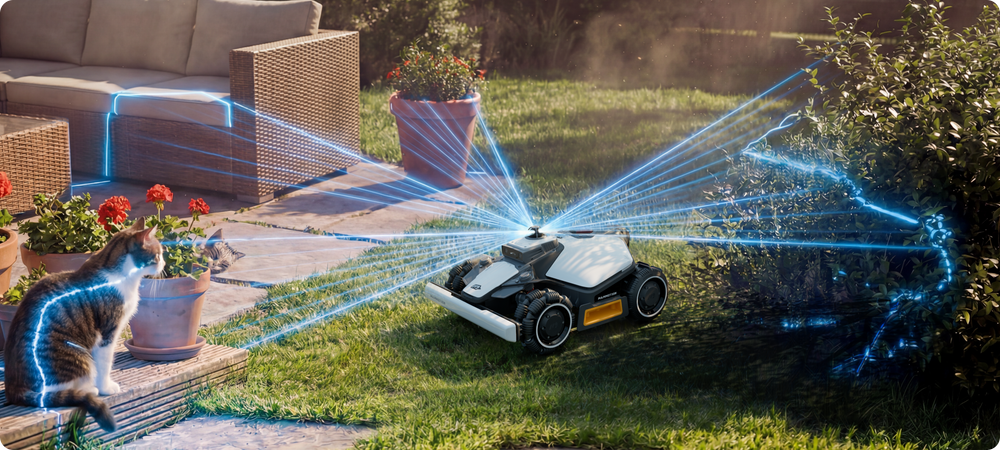
Stepping into 2026, Mammotion has redefined the expectations for "entry-level" models with the launch of the YUKA mini 2 1000. While many compact robot lawn mowers rely on basic sensors, this machine employs a state-of-the-art 360° LiDAR and Dual AI Vision Navigation system. This provides a full-spectrum "eyes-on" approach to lawn care, offering a 60-metre detection range coupled with a negligible 0.1m blind spot. Whether your lawn is a wide-open green or features sharp, narrow corners typical of British semi-detached properties, this mower handles the terrain as if it were on rails.
One of the standout features of its use is its cognitive ability. The dual-vision system doesn't just see obstacles; it understands them. Using advanced AI algorithms, it can distinguish between a stray garden gnome, a scattered flower pot, or a loose stone, predicting the safest path to continue its work without interruption. For those who prefer to keep their weekends quiet, the inclusion of a supplementary light module means it can even handle night-time shifts with ease, identifying boundaries in total darkness.
Under the hood, the performance is just as impressive. Equipped with a 6.1Ah battery (132Wh), it boasts a continuous mowing time of up to 2.5 hours. In a single charge, it can comfortably cover 250 m², ensuring that even the most lush, fast-growing British grass is kept in check.
Experience the YUKA mini 2 1000
2. Mammotion YUKA mini 2 800-800 m² Lawn

Following the success of the original series, the 2026 YUKA mini 2 800 has been upgraded to handle the visual complexities of modern British gardens. While most entry-level robotic lawnmowers rely on simple dual-camera setups that can struggle with glare or deep shadows, the 800 model introduces a Triple-Camera AI Vision and NetRTK system.
Two professional grayscale cameras handle depth perception and distance measuring regardless of lighting, while a high-definition colour camera identifies the exact boundaries of your turf. This visual intelligence is backed by NetRTK navigation and a 3-year free 4G data plan, ensuring the robot lawnmower maintains a stable, high-speed connection for precise positioning even under heavy cloud cover or near tall garden fences.
With Dropmow feature and combined with a compact body that can navigate passages as narrow as 55cm, the YUKA mini 2 800 ensures that no corner of your property is left untended.
Experience the YUKA mini 2 800
3. Gardena Sileno City 250-Up to 250 m² Lawn

The Gardena Sileno City 250 is the bridge between premium Swedish mowing technology and the specific needs of smaller, terrace-style gardens. Its "City" moniker is well-earned; the machine is designed to navigate the intricate, often cramped layouts of modern residential developments. Unlike the high-tech AI robot lawn mowers, the Sileno sticks to a traditional physical perimeter wire. While this ensures the robot lawnmower stays strictly within its bounds, it does mean homeowners need to invest time in the initial setup, pegging or burying wires around the lawn's edge.
Operating at a remarkable 57 dB, it is essentially the "stealth" option of the mowing world—you can easily run it on a Sunday morning without disturbing a single neighbor’s brunch. However, this focus on quiet, compact design comes with trade-offs in raw power and navigational intelligence. It utilizes a "random" mowing pattern, which, while effective eventually, lacks the systematic efficiency of modern path-planning models.
4. STIHL iMOW 3 EVO – Up to 500 m² Lawn

STIHL is a global titan in the power tool world, legendary for their chainsaws and professional landscaping gear. The iMOW 3 EVO is the high-performance evolution of their entry-level series, designed to bring a digital edge to their "built-like-a-tank" philosophy. The "EVO" designation is key here—it upgrades the standard model with an integrated 4G mobile network, faster driving speeds, and a more interactive LED matrix display. This ensures that even if you are away from home, you maintain a constant link to your robotic lawn mower via the MY iMOW app.
One of the most practical features for UK gardeners is the electric cutting height adjustment. Rather than manually turning a dial on the machine, you can adjust the blade height directly from your phone, making day-to-day operation far more convenient. This is already a standard feature on advanced wire-free robot lawn mowers such as the Mammotion YUKA mini 2 series.
However, it is worth noting that the iMOW 3 EVO still relies on a physical boundary wire system. While this ensures a reliable route back to the charging dock, it lacks the “vision” and intelligent path planning capabilities found in the latest AI-powered mowers in 2026.
Part 2. How do you determine the best robotic lawn mower for small garden use based on size?
In the UK, a "small garden" generally falls into three tiers: under 300 m² (typical urban terrace), 300–600 m² (semi-detached suburban), and 600–1000 m² (detached or corner plots). Choosing a lawn mower for a small yard rated slightly above your actual lawn size ensures the job is completed in a single charge, reducing battery strain and improving long-term efficiency.
Under 300 m² – The Urban Courtyard or Terrace
This is the quintessential British town garden, often found behind Victorian terraces or modern townhouses. These spaces are typically compact, narrow, and may include tight passages or awkward corners.
For this size, quiet operation, agility, and safety are essential. A robot lawn mower should be able to move smoothly through narrow corridors and around obstacles without causing disturbance to neighbours. Intelligent obstacle avoidance is particularly important in such confined spaces, where furniture, planters, or walls are close together.
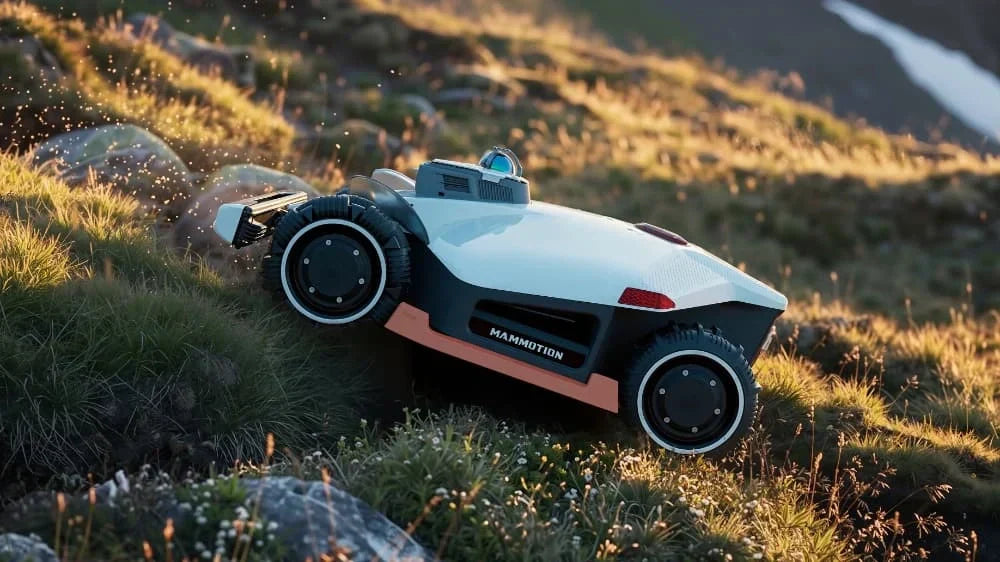
If the garden includes slight slopes, choosing a model with moderate climbing ability will ensure consistent performance without getting stuck.
300–600 m² – The Suburban Semi-Detached
This is the most common garden size in the UK, often featuring more complexity, such as sheds, trampolines, flower beds, or small trees.
At this scale, the requirements become more demanding. In addition to quiet operation, obstacle avoidance, and the ability to navigate narrow passages, a good robotic lawn mower should also offer:
- A larger battery capacity to reduce the need for frequent recharging
- Intelligent path planning to improve mowing efficiency and avoid missed areas
- Multi-zone management, allowing the robot lawn mower to handle separated lawn sections more effectively
These features ensure the robotic lawn mower can handle everyday obstacles while maintaining consistent coverage across the entire garden.
600–1000 m² – The Detached Property or Large Corner Plot
While still considered "small" in broader terms, a 1000 m² lawn is relatively large for a residential robotic lawn mower. These gardens often include multiple zones, longer mowing distances, and more noticeable slopes.
For this size, performance becomes the top priority. A suitable mower should provide:
- Stronger battery capacity and longer runtime, to cover larger areas efficiently
- Higher mowing efficiency, supported by systematic path planning
- Enhanced climbing ability to handle slopes with ease
- Advanced multi-zone management, ensuring smooth transitions between different lawn areas
At this level, intelligent navigation is no longer optional—it is essential for achieving a clean, consistent result without excessive mowing time.
Part 3. Key Features to Look for in a Robotic Lawn Mower for a Small Garden
Choosing the right robotic lawn mower for a small garden is not just about price or brand. It comes down to how well the machine handles space constraints, efficiency, and daily usability. Here are the key features you should focus on:
1. Lawn Coverage and Battery Capacity
When evaluating mowing performance and battery capacity, it is important to distinguish between mowing capacity per charge and total daily coverage.
- Per charge (m² per charge): Indicates how much area the robot lawn mower can handle in a single run. This directly depends on battery capacity and is crucial for efficiency.
- Per day (m² per day): Reflects the total area the robotic lawn mower can maintain over multiple charging cycles within a day.
2. Compact Design and Maneuverability
Small gardens often include tight corners, narrow passages, and irregular layouts.
A good robotic lawn mower should:
- Have a compact body size
- Turn efficiently in confined spaces
- Navigate through narrow pathways without getting stuck
- High manoeuvrability ensures full coverage, especially in L-shaped or segmented gardens.
3. Smart Navigation (Efficiency vs Random)
Navigation technology directly affects mowing efficiency.
- Random navigation: Moves unpredictably and gradually covers the lawn→ Lower efficiency, longer mowing time
- Systematic (planned) navigation:Uses AI, LiDAR, or RTK to follow structured paths→ Faster, more efficient, and no missed areas
For small gardens with obstacles, systematic navigation is strongly recommended, as it reduces overlap and improves precision.
4. Terrain Handling
Even small gardens are not always flat. Key factors to consider:
- Maximum slope capability (%)
- Stability on uneven ground
- Traction system (e.g. RWD or AWD)
5. Obstacle Avoidance
In real-world gardens, obstacles are everywhere: furniture, trees, toys, flower beds.
There are two main types:
- Basic (bump sensors): Detect obstacles after contact
- Advanced (AI vision/sensors): Detect and avoid obstacles before collision
For small and complex gardens, active obstacle avoidance is essential to prevent interruptions and damage.
6. User-friendly: Wire vs Wire-Free
This is one of the biggest differences in modern robotic lawn mowers.
- Wire-based systems: Require boundary wire installation→ Reliable but time-consuming to set up
- Wire-free systems (RTK / vision): No physical wire needed→ Easier setup, more flexible, supports multi-zone.
- RTK requires the installation of a dedicated RTK base station. Users must manually select an optimal installation location, which typically needs to be open and free from obstructions. In addition, the base station requires a separate power supply, making the overall installation process relatively complex. After setup, a certain period of signal calibration is usually required to ensure positioning accuracy. In contrast, NetRTK does not require any local base station. Users simply need an active network connection (such as 4G or Wi-Fi) to access differential positioning data and start operating the device immediately. As a result, the installation process is significantly simplified.
Currently, Mammotion robotic mowers support NetRTK technology, greatly reducing installation complexity and delivering a more convenient and efficient user experience.
7. Automation
Modern robotic lawn mowers are designed to minimise manual work.
Key automation features include:
- Automatic scheduling
- Automatic mowing height adjustment
- Auto return and recharge
- App control (remote operation)
- Multi-zone management
Advanced models may also offer:
- Real-time monitoring
- OTA updates
- Smart integrations
Part 4. How to Choose the Best Robotic Lawn Mower for a Small Garden?
Selecting the right robotic lawn mower for a small garden does not need to be complex. By following a structured approach, you can identify the most suitable model based on your lawn’s size, layout, and usage requirements.
Step 1: Measure Your Lawn Size
The first and most critical step is to accurately determine the total mowing area. Lawn size directly influences the required battery capacity and mowing performance. Selecting a robot lawnmower with insufficient coverage may result in: frequent recharging cycles, incomplete mowing sessions and increased long-term battery degradation.
Rather than relying on visual estimation, it is recommended to:
- Measure the lawn area in square metres (m²)
- Exclude non-grass surfaces such as patios, decking, or gravel areas
If your garden includes multiple sections (e.g. front and rear lawns), ensure the combined total area is taken into account.
Step 2: Consider Complexity (Obstacles and Slopes)
In addition to size, the structural complexity of the lawn is a key factor in determining the appropriate model. While simple, open lawns can be maintained by entry-level models, more complex environments require enhanced capabilities, like advanced obstacle avoidance, intelligent navigation systems and sufficient climbing ability.
Key considerations include:
- The presence of narrow passages or tight corners
- Fixed or movable obstacles such as trees, furniture, or flower beds
- Terrain conditions, including flat surfaces or slopes
Step 3: Choose a Model with Capacity Above Your Lawn Size
Once the lawn size and complexity have been established, the final step is to select a mower with an appropriate capacity rating. As a general guideline, choose a model rated approximately 20–30% above your actual lawn size. For lawns with slopes, multiple zones, or higher complexity, selecting a model with additional capacity is advisable, as these factors typically increase energy consumption.
Conclusion
Choosing the best robotic lawn mower for a small garden ultimately depends on selecting a model that matches your lawn’s size, complexity, and everyday usage requirements.
By accurately measuring your lawn area, assessing key factors such as obstacles and terrain conditions, and opting for a model with slightly higher capacity than necessary, you can ensure efficient, reliable, and low-maintenance performance over the long term.
In this guide, we have also selected the top four robotic lawn mowers, covering both wire-based and wire-free solutions, to help you make a more informed decision.
Did you like this article? Add us as a preferred source to find us more easily on Google.