






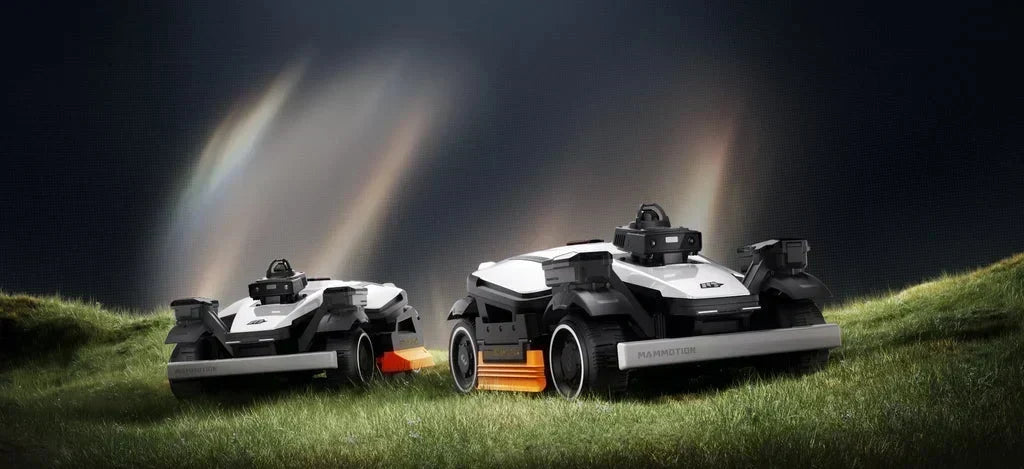
Most robotic lawn mowers get the middle of the lawn right. It’s everything else — the blind corner during a reverse manoeuvre, the scraped patch left by a pivot turn, the ring of uncut grass along a wall — that tells you how far the automation really goes.
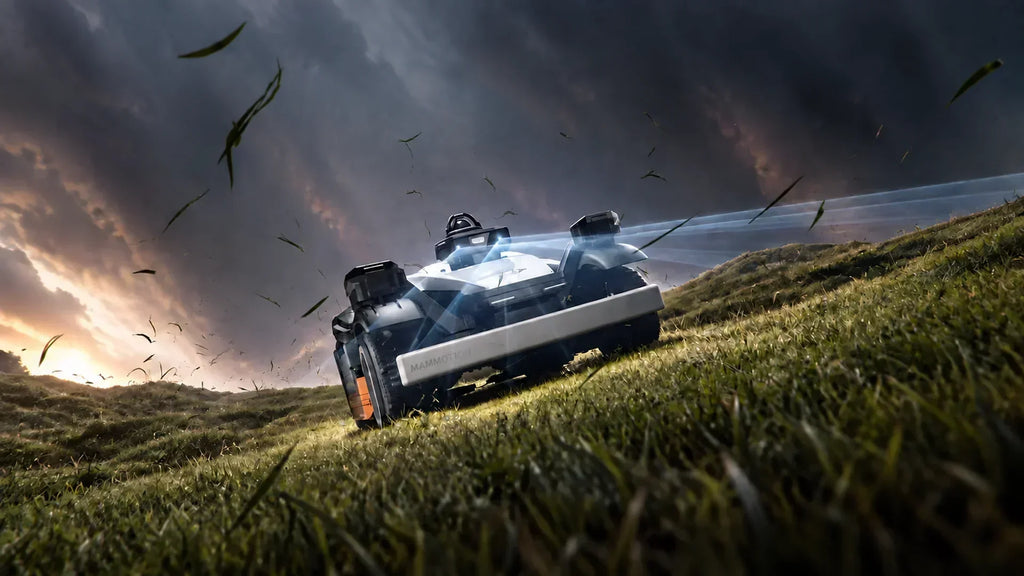
Mammotion LUBA 4 AWD, Mammotion’s all-wheel drive robotic lawn mower, was built around those exact moments. Surround Quad-Vision gives it awareness in every direction, not just ahead. Lawn-Friendly AWD lets it turn and reverse without dragging or scuffing the turf. And Automatic Edge Trimming reaches the last centimetre that used to be left to a hand trimmer. Together, they don’t just mow a lawn — they finish it.
01 / Surround Quad-Vision — Leaving Blind Spots Behind
A robot lawn mower’s blind spot isn’t usually in front of it. It’s during the turn, the reverse, the pass along an edge — the moments when the machine needs full awareness of what’s around it, not just of where it’s heading.
Forward-facing cameras have been standard on robot lawn mowers for years. More recently, some models have added a rear or side camera to close a gap. But that only shifts the problem: cover the reverse view, and the diagonal rear is still unwatched. Cover the side, and the corner behind it isn’t. A blind spot isn’t one direction — it’s always the next one that hasn’t been covered yet.
How LUBA 4 AWD Responds

Mammotion LUBA 4 AWD rebuilds perception around the whole machine rather than a single direction. Two front-facing cameras cover the direction of travel and the forward sides; two rear-facing cameras cover the left and right rear, with their fields of view connecting around the robot lawn mower’s body. The vision system identifies the objects, terrain, and changes in the scene around it. Building on that, LiDAR adds fused distance-sensing across front, side, and diagonal-rear sectors, measuring how far those objects actually are, while NetRTK provides global positioning, keeping track of where the machine itself is. The three layers work together in real time, giving the robot lawn mower a continuous, live read of its surroundings to decide its next move.
What This Means Day to Day
- A more complete read of the yard. The robot lawn mower’s understanding extends beyond the path it’s travelling to what’s happening around it — which supports more consistent paths and helps it avoid re-mowing the same patch of grass repeatedly.
- Steadier awareness around obstacles and activity nearby. The four cameras continuously track what’s nearby, so the robot lawn mower can adjust in real time rather than reacting only to what’s directly ahead.
- Genuine two-way capability. Because perception no longer depends on the direction of travel, LUBA 4 AWD can reverse over longer distances and mow while moving backward — handling edges and tight spaces without needing to stop and turn in place — reversing is as steady as moving forward.
02 / Lawn-Friendly AWD — Traction Without the Damage
Most complaints about a robot lawn mower don’t start at the blade. They start at the chassis: a slope it can’t quite climb, a turn that scrapes the turf, the ring-shaped mark left behind after weeks of pivoting in the same spot, an uneven cut on rolling ground. All of it comes down to how the machine drives, steers, and stays grounded.
Conventional robot lawn mowers typically rely on two-wheel drive and skid steering, where power reaches only the rear wheels and turns are dragged through by a difference in wheel speed. The result is a familiar pattern: weak climbs, scraped corners, and pivot marks. The chassis isn’t just how the robot lawn mower gets around — it’s where the lawn’s condition is decided.
Mammotion LUBA 4 AWD addresses this at chassis level, with four elements working together: power to every wheel, independent front-wheel steering, driving in both directions, and suspension that keeps the deck level regardless of terrain.
All-Wheel Drive, on Every Wheel

LUBA 4 AWD sends drive power to all four wheels. This all-wheel drive keeps the robot lawn mower climbing steadily on slopes of up to 80% (38.6°) and lets it cross obstacles up to 60 mm high — tree roots, step edges, drain covers — while sustaining a mowing speed of up to 1.0 m/s. Power isn’t reserved for one pair of wheels; it’s the coordinated response of all four to the terrain underneath them.
Independent Front-Wheel Steering

Each front wheel has its own independent, active steering motor, rather than being dragged into a turn by a speed difference between the wheels. That lets the robot lawn mower trace curved edges — flower-bed arcs, tree rings, irregular borders — with a clean arc instead of a scrape, removing the lateral tyre friction that leaves brown rings and visible tracks.
Bidirectional Driving

The robot lawn mower can also drive and mow in both directions. When a pass ends, it simply works back the other way instead of pivoting in place, so the repeated wheel-scrubbing and turf tearing of a U-turn don’t happen at all.
Front Suspension Arm and a Floating Deck

Underneath, a front suspension arm and a floating cutting deck work together on uneven ground: the suspension arm keeps all four wheels grounded so the body stays level, while the deck floats independently to follow the contours of the lawn. Wheels hold the ground, the deck hugs the grass, and cutting depth stays consistent across changing terrain.
What This Means Day to Day
- Confidence on slopes. Power delivered to all four wheels means steep or uneven ground can be mowed as part of the regular route, not treated as a separate problem.
- No scrape marks after turns. Independent front-wheel steering replaces the drag of skid steering, keeping borders and flower-bed edges free of visible wear.
- No pivot damage. Bidirectional driving removes the need for U-turns, so turnaround points don’t develop bald or thinning patches over time.
- A consistent cut on uneven ground. The suspension and floating deck hold cutting height steady across rises and dips, giving the lawn a more even finish overall.
03 / Automatic Edge Trimming — The Last Centimetre, Covered
Automation on a robot lawn mower usually stops a few centimetres short of the edge. The cutting discs sit at the centre of the body, and the body itself needs to keep a safe distance from walls, flower beds, and steps. The result is a thin ring of uncut grass along every boundary — the part a user still has to finish by hand, even after buying a fully automated robot lawn mower. The grass at the edge is a small amount, but it’s what decides whether the whole lawn actually looks finished.
Mammotion LUBA 4 AWD’s answer is a retractable arm that carries the trimming unit beyond the chassis, reaching the grass the main deck is designed to stay away from.

A Retractable Arm That Reaches the Last Centimetre
LUBA 4 AWD’s edge-trimming unit sits on a retractable arm. During normal mowing, the arm stays tucked inside the body, adding nothing to catch or interrupt the mowing rhythm. When edge work begins, the arm extends beyond the chassis, carrying the trimming unit to the grass the main deck can’t reach. Retracted and extended are two distinct states, each matched to a different kind of work — so the last centimetre that used to be left to a hand trimmer is now covered by the arm instead.
Trimming Walls and Cliffs from a Safe Distance
Vertical and downward edges each pose their own problem: get too close to a wall and the machine risks bumping it; get too close to a cliff and it risks falling. Keep a safe distance from either, and a strip of grass goes uncut. LUBA 4 AWD’s arm reaches out from the body rather than requiring the body itself to close the gap — the robot lawn mower stays inside a safe zone while the arm handles the edge, whether that edge is a wall or a cliff.
Following the Curve, Centimetre by Centimetre
Edges are rarely straight lines. A flower-bed arc, the ring around a tree, an irregular line where paving meets lawn — each one changes continuously. The arm adjusts its angle as it goes, following the curve of the boundary rather than the shape of a fixed cutting path, so turning and trimming happen in the same pass.
Three Trimming Heights, Customized by Yourself
Trimming height can be set to one of three preset levels, independently of the main deck’s cutting height, so the edge and the rest of the lawn can be tuned separately to match the season or the grass type.
What This Means Day to Day
- Less hand-finishing at the boundaries. The arm reaches the grass along walls, beds, and steps that the main deck is designed to avoid, so less is left for a trimmer or shears afterwards.
- A cleaner line along walls and cliffs. Because the arm — not the body — closes the gap, edges near vertical walls or cliffs can be trimmed without the robot lawn mower having to risk contact or a fall.
- A tidier finish on curved borders. Following the actual shape of a bed or path, rather than a straight approximation of it, leaves fewer stray tufts of grass along curved edges.
- Edge height that matches the season. Adjusting trimming height separately from the main deck allows a shorter spring cut or a taller summer edge without changing how the rest of the lawn is mowed.
Note: the edge-trimming module is an optional accessory on supported LUBA 4 AWD models. For model-by-model compatibility, see our companion article on LUBA 4 AWD specifications and availability.
Three Upgrades, One Standard of Care
Surround Quad-Vision, Lawn-Friendly AWD, and Automatic Edge Trimming are the three core upgrades behind LUBA 4 AWD. Each solves a different problem — what the robot lawn mower sees, how it moves, and where it stops mowing — but all three point in the same direction. A robot lawn mower that senses in every direction has less reason to backtrack or re-mow. A chassis that turns and reverses without dragging protects the very grass that all-round awareness helps it find. And an arm that reaches the last centimetre finishes what the rest of the machine was built to protect. None of the three replaces the others; together, they add up to a lawn mowed edge to edge, without the wear that usually comes with getting there.
Follow Mammotion’s official channels to be the first to hear when LUBA 4 AWD becomes available.
*Product images are for illustration only. The actual product may vary. The specific details are subject to the final product launch.
Did you like this article? Add us as a preferred source to find us more easily on Google.