


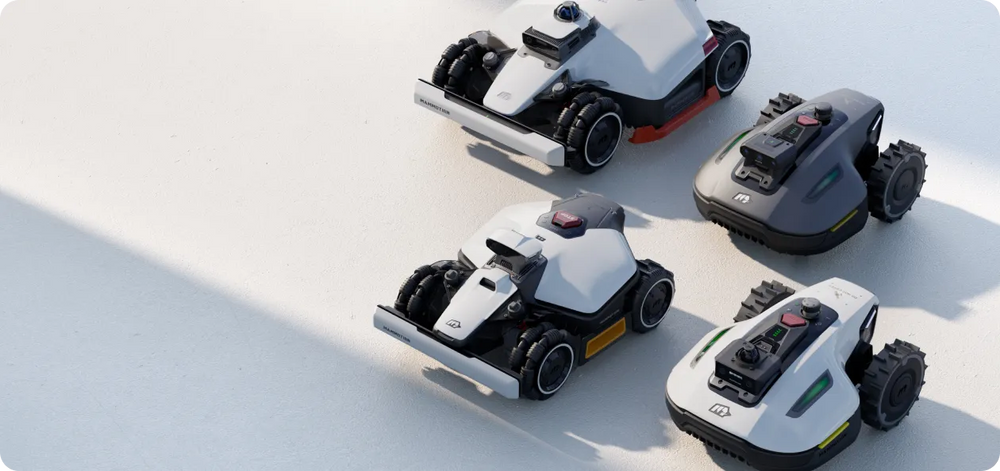




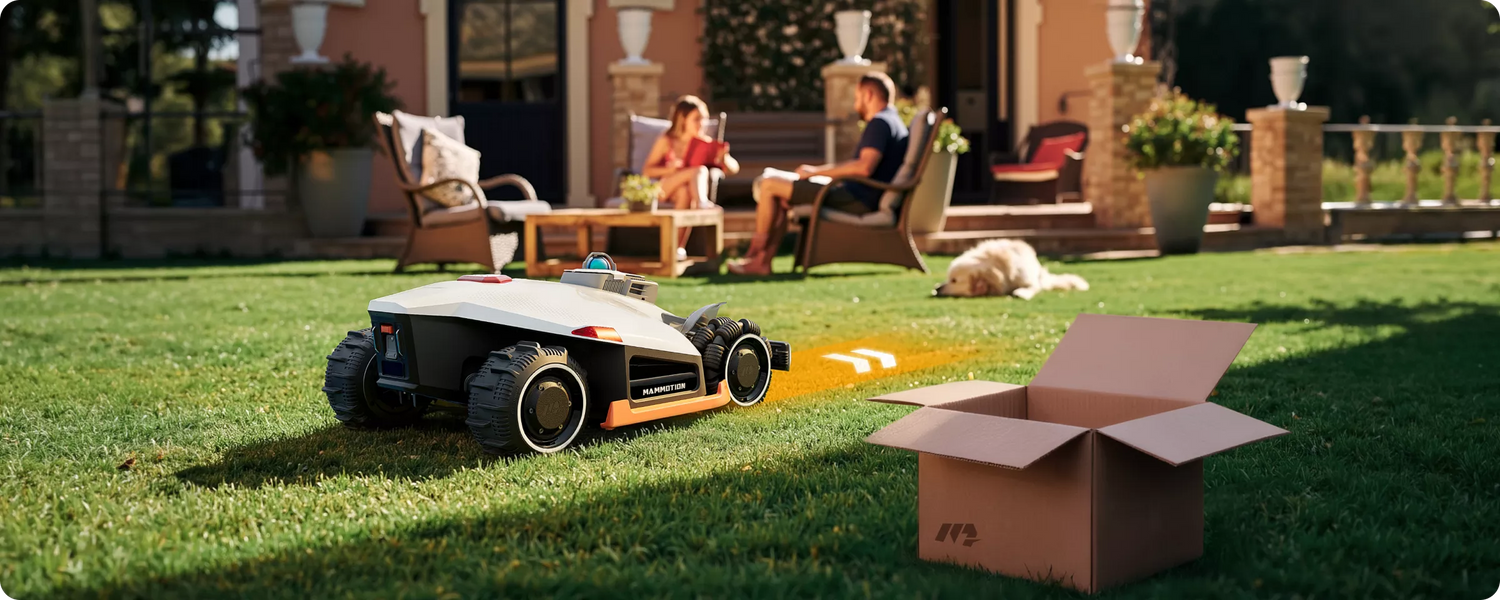
For years, owning an automated lawn mower felt a bit like owning a toy. You’d spend hours burying boundary wires, only to watch the machine bounce aimlessly off your fence like a digital pinball. We are now witnessing a massive shift: the transition from "blind" bumping to intelligent perception. This is the dawn of the thinking mower.
An AI robot lawn mower like parts of Mammotion AI robot lawn mowers with 10 TOPS AI chip represents the next generation of turf care, moving beyond simple automation to true intelligence. Unlike older models that bump into obstacles at random, an AI powered lawn mower utilizes a "Triple Threat" of core technologies—Auto Mapping, Path Planning, and Adaptive Cutting—to perceive its environment, calculate the most efficient route, and adjust its blade speed based on real-time grass conditions.
- Auto Mapping: The ability to build a digital twin of your yard without physical wires.
- Path Planning: The logic used to mow in neat, efficient rows rather than random patterns.
- Adaptive Cutting: The real-time adjustment of torque and speed based on the health and height of the grass.
Part 1. From "Random" to "Brainy": Why Traditional Robot Mowers Are Failing You
If you’ve ever used a first-generation automatic robotic lawnmower, you know the frustration. These traditional units rely on "collision-based navigation." They drive until they hit something, turn at a random angle, and repeat. While this eventually cuts the whole lawn, it is incredibly inefficient
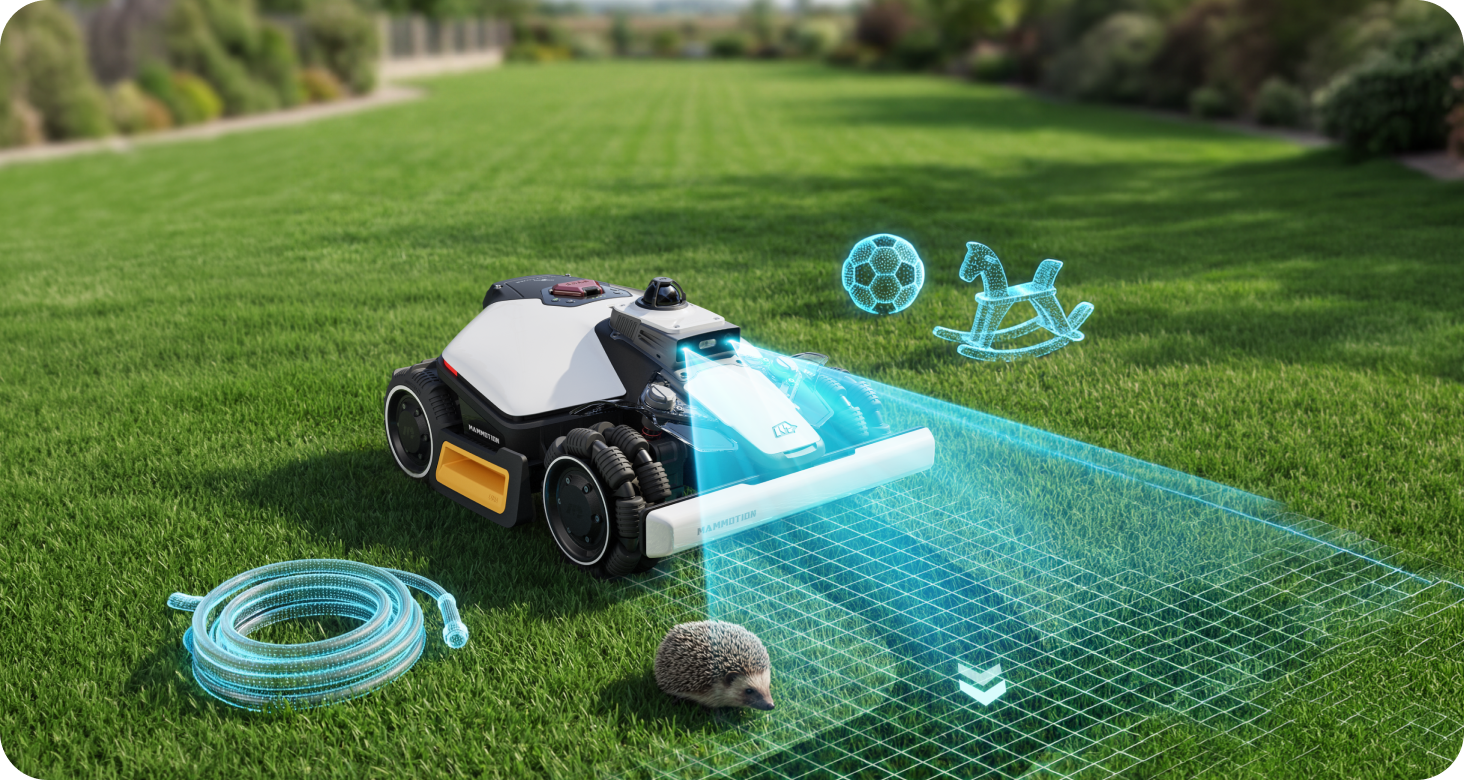
The "AI Upgrade" solves this by treating your lawn as a data set. Using computer vision and machine learning, an auto robot lawn mower transforms from a blind vacuum into an intelligent navigator. It recognizes the difference between a blade of grass and a stray garden hose, a pet, or a flower bed.
|
Feature |
Traditional Robotic Mower |
AI-Powered Robot Mower |
|
Navigation Style |
Random / "Ping-Pong" |
Systematic / Parallel Rows |
|
Boundary Requirement |
Physical Perimeter Wire (Burying required) |
Virtual Boundaries (GPS/Vision) |
|
Bumps and turns |
Visual recognition & avoidance |
|
|
Efficiency |
Low (Re-mows same areas) |
High (Single-pass coverage) |
|
Complex Lawns |
Struggles with narrow paths |
Easily navigates multi-zone layouts |
Most people think the main benefit of AI is just "not getting stuck." However, the real breakthrough is soil health. Because an AI mower doesn't drive over the same patch of grass many times, it significantly reduces soil compaction and wheel wear on your turf, leading to a greener, more resilient lawn over time.
Part 2. Auto Mapping: No Wires, No Hassle, No Limits

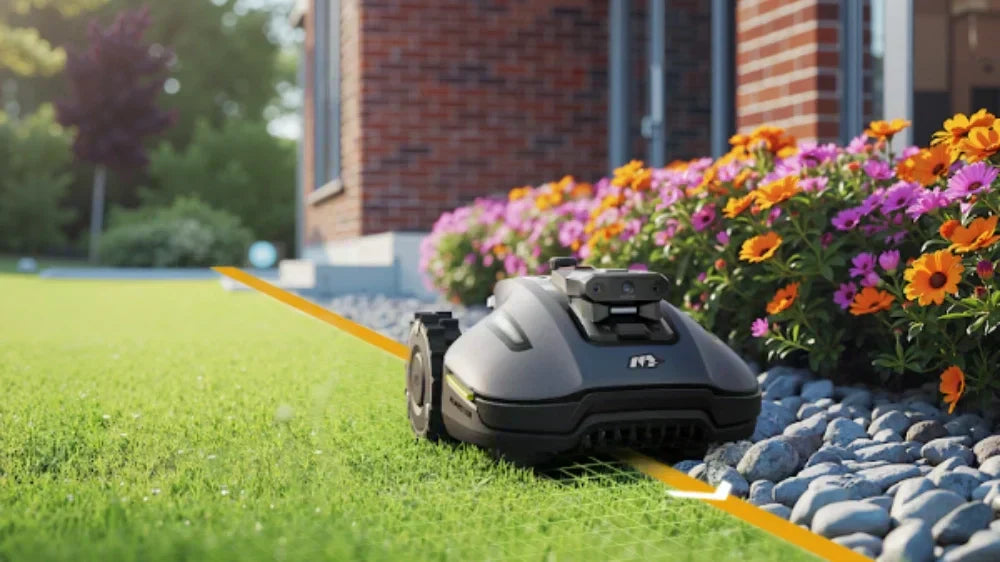
Auto Mapping is the process where an AI robot lawn mower uses onboard sensors to create a high-definition digital blueprint of your property. This eliminates the need for physical perimeter wires, allowing the mower to understand exactly where the grass ends and the driveway begins through virtual boundaries.
In the past, setting up an automatic robotic lawnmower required a grueling weekend of digging trenches for boundary wires. If the wire snapped, the mower went "blind." Today, an AI powered lawn mower uses intelligent initialization to identify lawn boundaries, multi-zone layouts, and permanent obstacles like trees or statues automatically.
It creates a "No-Go Zone" inventory without you lifting a finger, ensuring the mower stays on the turf and off your prized petunias.
How AI Auto Mapping Works?
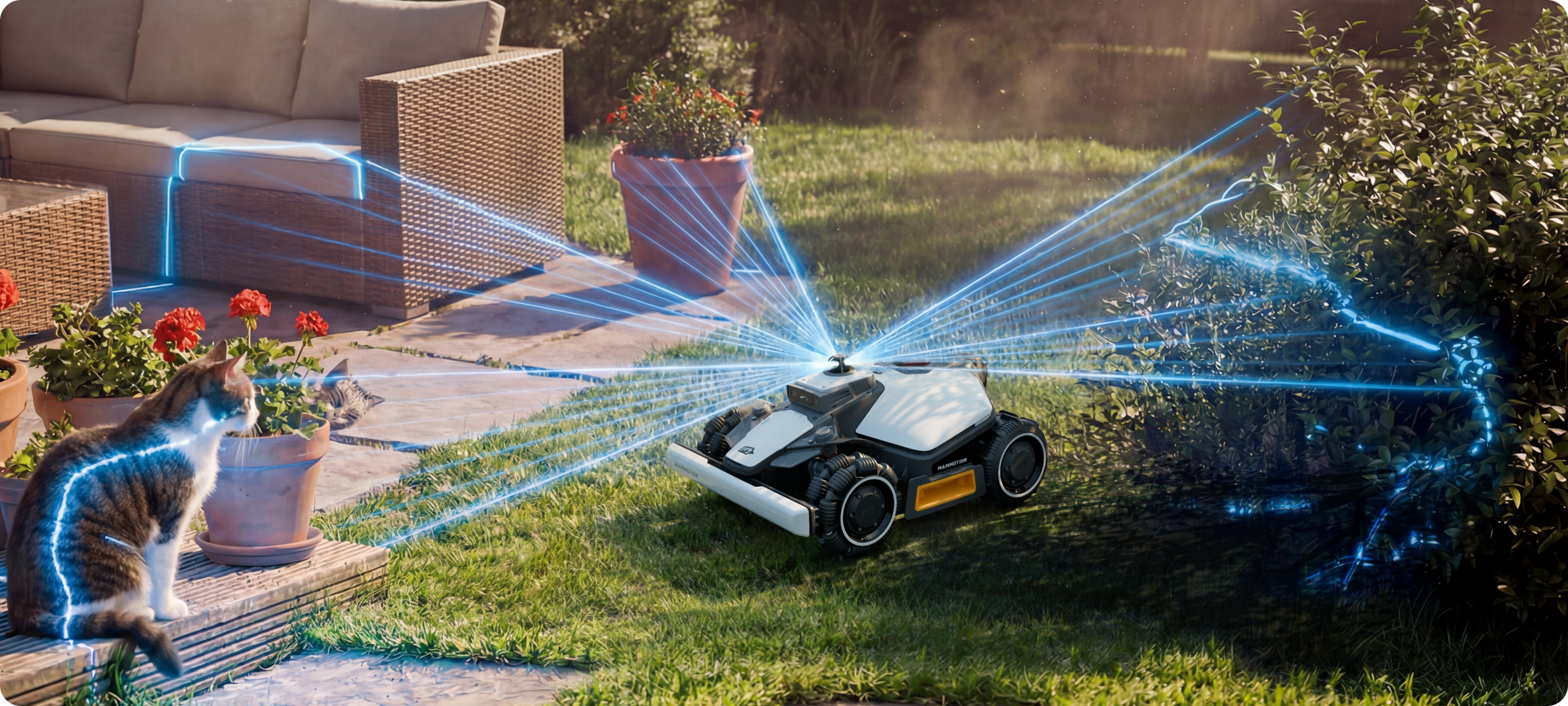
The magic happens through a combination of "eyes" and "ears." Most high-end AI vision robot mower models utilize a technology stack that includes:
- LiDAR: Scanning the environment 360 degrees to detect depth and distance.
- RTK-GPS: Real-time Kinematic positioning that gives the mower centimeter-level accuracy.
- AI Vision: The AI vision system recognizes obstacles and cliffs, ensuring safer and more efficient mowing AI Vision system recognises obstables,cliffs and make mowing more efficient and safe.
Benefits of Auto Mapping for Homeowners
The primary advantage is deployment speed. You can have a professional-grade AI robotic lawn mower running within minutes of unboxing. Furthermore, it offers:
- Seamless Adaptation: Perfect for homeowners who frequently renovate their landscaping. Mammotion robot lawn mower new Dropmow function allows users to mow with creating a map.
- Complex Terrain Management: AI can map narrow side-yards and "islands" that would be impossible to wire manually.
- Reliability: No more "wire break" errors that render the mower useless.
Part 3. Precision Path Planning: Cut Mowing Time Effectively

Path Planning is the computational logic that tells an automated lawn mower the most efficient route to take. Instead of random wandering, the AI calculates a systematic "S-shaped" or "Z-shaped" pattern, ensuring 100% coverage in the shortest time possible while avoiding unnecessary overlap.
Traditional Random Navigation vs AI Path Planning
Imagine trying to vacuum a room by walking in random directions until you hit a wall—that is how traditional mowers work. They waste up to 60% of their battery re-cutting grass they already mowed.
In contrast, an AI robot lawn mower uses structured mowing. It knows exactly where it has been and where it needs to go next. This systematic approach ensures that the mower spends less time on your lawn and more time at the charging station, extending the lifespan of the motor and battery.
How AI Path Planning Works
The path planning engine divides your lawn into manageable cells. It then executes a strategy based on:
- Zone Optimization: Choosing the best starting point for each specific area.
- Edge Handling: The AI calculates a specific perimeter pass to ensure edges are crisp before starting the main area.
- Turn Efficiency: Using "smooth turn" algorithms to prevent the wheels from tearing up the grass during 180-degree pivots.
Why Smart Path Planning Improves Lawn Quality
Beyond just speed, systematic mowing is better for the grass. When an AI powered lawn mower follows precise rows, it ensures a uniform cut height across the entire yard. This prevents "patchy" growth and gives your lawn those professional "stadium stripes" that signify a healthy, well-maintained garden.
|
Efficiency Metric |
Random Path Mower |
AI Path Planning Mower |
|
Time for 500sqm |
4 - 6 Hours |
1.5 - 2 Hours |
|
Battery Waste |
High (Redundant movement) |
Low (Direct routes) |
|
Lawn Aesthetics |
Uneven / Shaggy |
Uniform / Striped |
|
Coverage Accuracy |
~80% (Misses corners) |
~99.8% (Precision edges) |
Part 4. Adaptive Cutting: A Mower That "Feels" Your Grass

Adaptive Cutting is the real-time intelligence that allows an AI powered lawn mower to modify its blade torque and driving speed based on the physical resistance and density of the grass. Instead of a "one-size-fits-all" spin, the mower senses where the lawn is thick or thin and reacts accordingly to ensure a perfect cut without wasting energy.
How AI Detects Grass Conditions
This isn't just a simple timer; it’s a sophisticated feedback loop. An AI vision robot mower uses a combination of data points to "feel" the yard:
- Motor Resistance Feedback: Measuring the electrical current required to spin the blades. Higher resistance equals thicker grass.
- Visual Recognition: Advanced AI robotic lawn mower models use cameras to identify grass height and even weed clusters before the blades even touch them.
- Historical Data: The AI remembers which parts of your yard grow faster (perhaps due to sunlight or sprinklers) and pre-emptively prepares for tougher cutting in those zones.
Benefits of Adaptive Cutting
The result is a healthier lawn and a more durable machine. By adjusting to the conditions, the mower provides:
- Precision Grooming: No more "shaggy" spots in fast-growing areas.
- Extended Hardware Life: The motor isn't running at 100% capacity unnecessarily, reducing wear and tear.
- Weather Resilience: AI can detect if the grass is too wet (and therefore too heavy to cut safely) and may suggest delaying the session to protect the roots.
Part 5. The Synergy: The "Triple Threat" of a Fully Autonomous Lawn System
The true power of an automated lawn mower isn't found in a single feature, but in the synergy of Mapping, Planning, and Cutting. When these three systems communicate, the mower ceases to be a tool and becomes a fully autonomous robotic system capable of independent decision-making.
In a professional auto robot lawn mower, these three pillars form a continuous loop:
1. Auto Mapping (The "Where")
Defines the digital boundaries and prevents the mower from escaping the yard.
2. Path Planning (The "How")
Organizes those boundaries into an optimized, logical route.
3. Adaptive Cutting (The "Execution")
Ensures that as the mower follows that route, it treats every individual blade of grass with the appropriate amount of power.
Most users view these as separate "specs" on a box, but in reality, they work like a human brain. The Mapping is the memory, Path Planning is the strategy, and Adaptive Cutting is the muscle memory
Without all three working in harmony, you don't have an AI mower. This integration is what allows an automatic robotic lawnmower to handle 45-degree slopes and complex garden "islands" that would leave traditional mowers stuck or spinning their wheels in circles.
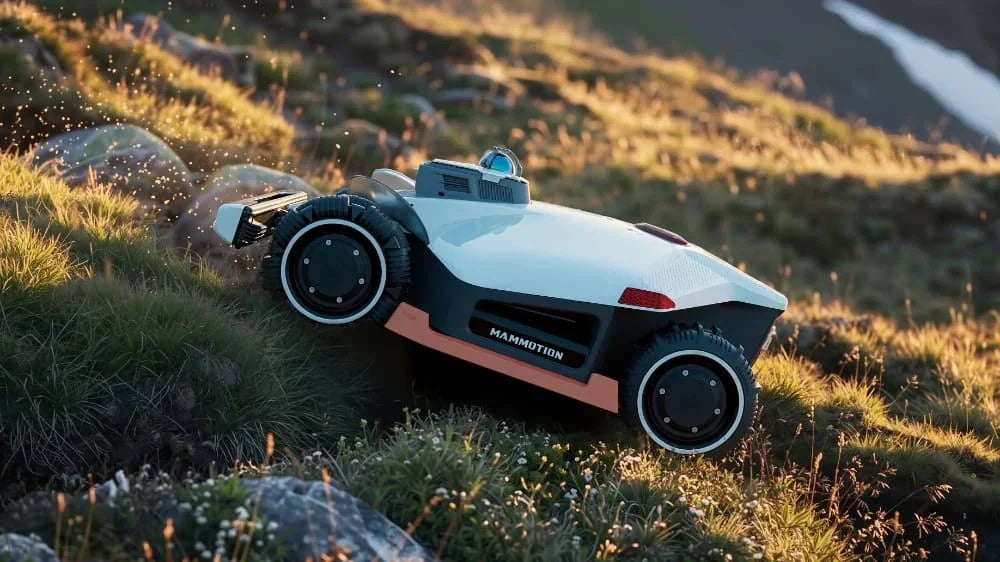
This deep AI integration is exactly what enables LUBA 3 AWD to confidently handle up to 80-degree slopes, navigate complex garden layouts, and mow around multiple lawn “islands” with ease—situations where traditional robotic mowers often get stuck, lose direction, or spin aimlessly in circles.
With AI vision, intelligent navigation, and adaptive mowing control, Mammotion LUBA 3 AWD delivers real-world performance that goes far beyond basic automation—bringing true AI-driven lawn care to demanding outdoor environments.
Part 6. Is an AI Mower Worth It? Choosing the Right Model for Your Yard
An AI robot lawn mower is a high-value investment for anyone with a complex, large, or multi-zone yard where traditional mowers fail. While the upfront cost is higher than basic models, the long-term savings in manual labor, professional landscaping fees, and energy efficiency make an AI powered lawn mower the most cost-effective solution for modern homeowners.
Who Should Invest in AI Technology?
Not every yard requires a supercomputer on wheels, but for certain landscapes, an auto robot lawn mower is the only viable option. You should consider upgrading if your property includes:
- Irregular Shapes: Lawns with narrow side-yards, sharp angles, or circular flower beds.
- Steep Slopes: AI-driven units manage traction and torque better on inclines of up to 45% (approx. 24°).
- Multiple Zones: If your front yard and back yard are separated by a narrow paved path, an AI vision robot mower can navigate the "bridge" without getting lost.
Comparison: Choosing Your Robotic Partner
When shopping for an automatic robotic lawnmower, use the table below to determine which level of intelligence fits your lifestyle:
|
Feature |
Entry-Level Automated Mower |
Mid-Range Smart Mower |
High-End AI Vision Mower |
|
Best For |
Small, flat, fenced yards |
Medium yards with few obstacles |
Medium or Large, complex, open estates |
|
Setup Time |
4-8 Hours (Burying wire) |
1-2 Hours (App setup) |
< 30 Mins (Auto-scan) |
|
Object Detection |
Bump sensors only |
(Stops before hit) |
AI Vision (Recognizes & bypasses) |
|
Maintenance |
High (Check wires/blades) |
Medium |
Low (Self-adjusting/Diagnostic) |
Conclusion
The era of the "dumb" mower is coming to a close. By integrating Auto Mapping, Path Planning, and Adaptive Cutting, the modern AI robot lawn mower has solved the three biggest pain points of robotic gardening: difficult installation, inefficient patterns, and poor cut quality.
Whether you are looking for an automated lawn mower to save you four hours every weekend or you want the most advanced AI vision robot mower to maintain a pristine estate, the shift toward AI is a long-term upgrade. These machines transform lawn care from a recurring chore into a background service—quietly, intelligently, and perfectly maintaining your yard while you reclaim your time.
Frequently Asked Questions
1.Can an AI robot lawn mower handle fallen leaves or twigs?
Yes, for light debris. An ai powered lawn mower can mulch small, dry leaves into natural fertilizer. However, large branches or thick leaf piles can dull the blades. For peak performance, clear heavy debris or choose a model with advanced obstacle avoidance to bypass larger objects.
2. What is the battery life of an AI robotic lawn mower?
Typically 3–5 years. Most units feature replaceable lithium-ion cells, allowing you to easily extend the machine's overall service life for a fraction of the cost of a new mower.
3. Is it safe to operate an automated lawn mower at night?
Yes. An automated lawn mower operates quietly (under 60dB) without disturbing neighbors. High-end ai vision robot mower models also feature night vision and ultrasonic sensors to detect and avoid nocturnal wildlife or pets, ensuring safe 24/7 lawn maintenance.
4. How do auto robot lawn mowers prevent theft?
They use a multi-layer security system. Most auto robot lawn mower units include GPS geofencing that alerts your phone if moved. Additionally, PIN code locks and loud tilt alarms make the device unusable and unattractive to thieves.
5. Can an AI robot lawn mower trim edges effectively?
Modern ai robot lawn mower models with "Cut-to-Edge" technology use precise Path Planning to minimize uncut borders. While tight 90-degree corners may occasionally need manual touch-ups, AI mowers reduce the need for string trimming by over 90% compared to traditional robots.
6. Should I leave my automatic robotic lawnmower out in the rain?
It’s best to avoid it. Although most automatic robotic lawnmower units are waterproof (IPX5), mowing wet grass leads to clumping and poor cut quality. Smart mowers use rain sensors to automatically return to the dock and resume work only when the turf is dry.
7. What are the annual maintenance costs for an AI mower?
Maintenance is minimal. Expect to spend $30–$70 annually on replacement blades and electricity. Unlike gas mowers, an ai powered lawn mower requires no oil changes, spark plugs, or air filters, reducing long-term ownership costs by roughly 75%.
Did you like this article? Add us as a preferred source to find us more easily on Google.