






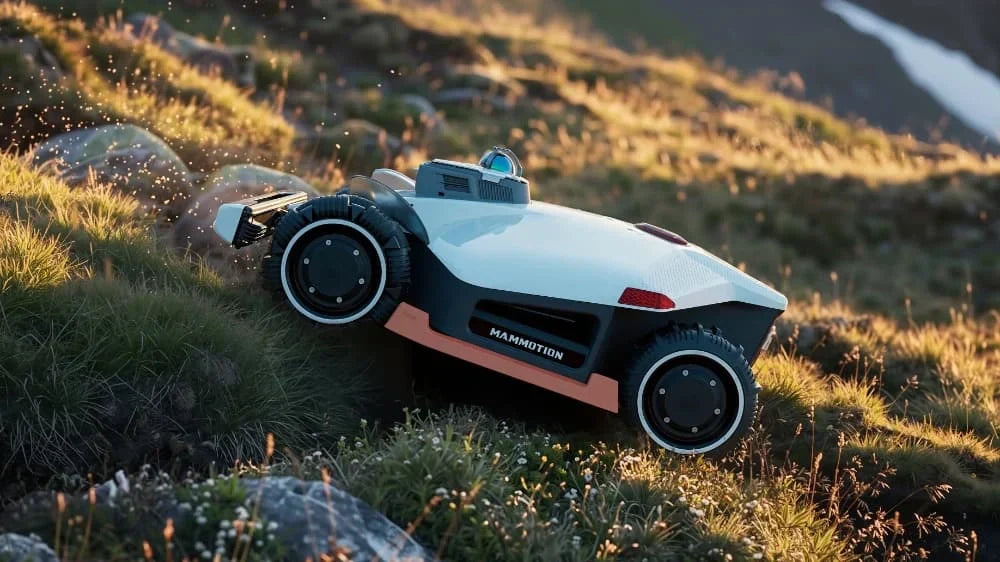
To maintain a manicured look without the physical graft, modern homeowners are increasingly turning to rugged 4WD robotic lawn mower technology to handle terrains that were previously considered "unmowable" by automatons. Historically, if you needed serious climbing power, options were limited to incredibly expensive, high-maintenance commercial machines.
However, the landscape has changed dramatically. New innovators, spearheaded by many advanced Brands like Mammotion, have disrupted the market, offering smarter, wire-free navigation combined with ferocious top AWD robot lawn mowers performance at a fraction of traditional costs.
In this comprehensive guide, we will cut through the technical jargon to help you understand exactly what to look for in a 4WD robot mower. We will compare the market leaders—comparing the seasoned veterans against the new technological powerhouses to ensure you choose the perfect AWD robotic lawn mower.
Part 1. Who Needs a 4WD Robotic Lawn Mower?
While standard front- or rear-wheel-drive mowers suffice for flat, small lawns, a 4WD robotic mower is essential for steep slopes, damp soils, or large, complex properties.
Sloped or Uneven Gardens
Many UK gardens feature rolling banks, sunken areas, or natural inclines. Standard mowers often slip on damp grass or get stuck, while a 4WD mower maintains grip by distributing power to all wheels, keeping steady traction even on slick or mossy surfaces.
Large Lawns
For substantial plots, a 4WD mower can cover vast areas efficiently without losing momentum or overheating, unlike smaller units that struggle over long distances or uneven turf.
Complex Layouts
Winding paths, flower borders, and shrub islands demand more than smart software—they require agility. A 4WD mower can pivot and adjust on tricky transitions, preventing castors from getting snagged on roots or dips.
Fully Automated Experience
If you want true automation, a 4WD mower provides peace of mind, reducing the risk of slips or stops on slopes that would require manual intervention.
Part 2. How to Choose the Most Appropriate 4x4 Robotic Lawn Mower?
Choose a 4x4 robotic mower that excels in navigation, slope handling, and safety: multi-sensor navigation for precision, all-wheel drive with high-torque motors for steep slopes, and AI obstacle detection with smart safety features.
1. Drive System: AWD vs Tracked Wheels
When shopping for a 4WD robotic lawn mower, you will encounter two main "all-terrain" designs: traditional four-wheel drive and tracked (caterpillar) systems. While tracks offer superior grip on extreme 45° vertical drops, they can be "brutal" on delicate British turf. During tight turns, tracks tend to "scuff" or "rip" the grass. In contrast, an all wheel drive robot lawn mower with independent hub motors provides a "gentler" touch.
2. Slope Performance and Power
Compared to standard 70% AWD models, the 80% slope capability delivers stronger climbing performance and improved stability on steep terrain. While real-world results also depend on traction, drive system, and terrain conditions, a higher slope rating provides a clear advantage in handling more demanding landscapes.
3. Navigation Technology
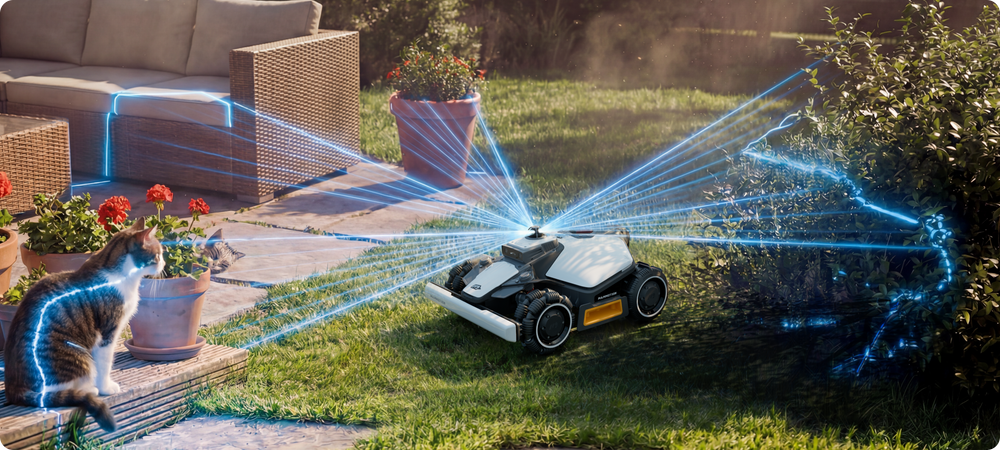
In the UK, tall hedges and thick stone farmhouse walls often create “signal shadows”, which can cause basic GPS or single-sensor RTK systems to struggle with consistent performance. For a truly hassle-free experience, it is advisable to opt for a multi-sensor fusion system. Such systems enable your mower to maintain precise and reliable navigation, whether it’s operating at night without sunlight or under dense tree cover where signals are restricted.
4. Wireless vs Boundary Wire Installation
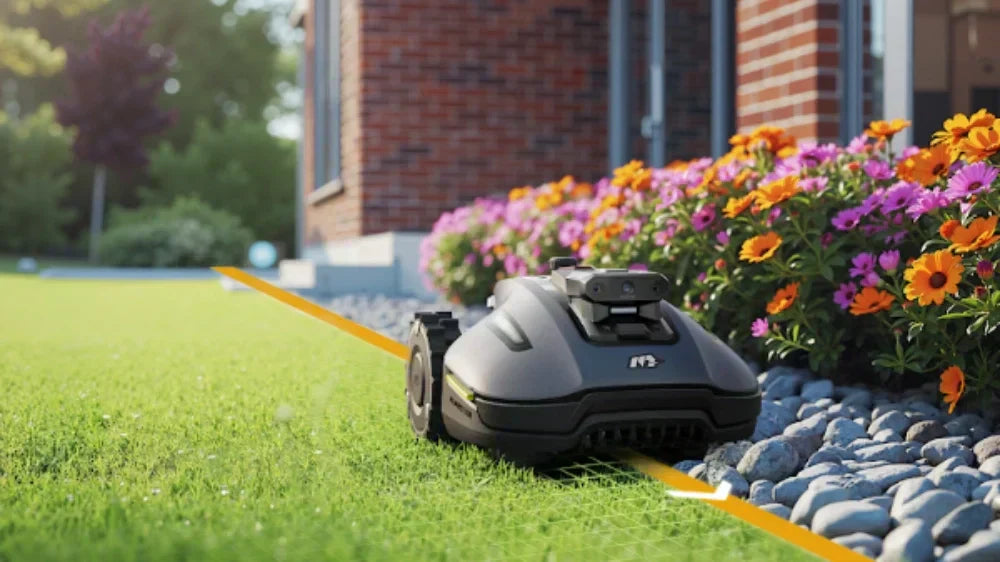
The days of trenching for boundary wires are, in many ways, coming to an end. For modern 4WD robot mowers, a wireless setup has become the ideal choice. Not only does it save you an entire day of labour-intensive installation, but it also makes future garden modifications far more flexible.
For instance, if you decide to add a new flower bed or patio, a wireless AWD robotic lawn mower allows you to update the virtual boundaries directly via the app—without the need to dig up and reconnect buried cables in the rain.
Most solutions on the market today rely on RTK technology, which typically still requires a dedicated RTK base station. In contrast, systems that support NetRTK navigation offer greater convenience, eliminating the need for a physical base station while still delivering reliable performance—even in environments without network connectivity.
5. Cutting Efficiency
A larger cutting width and multiple blades significantly improve mowing efficiency, allowing the mower to cover more ground in less time. This is especially beneficial for larger lawns, where a narrow or single-blade mower would take much longer to complete the job.
6. Battery Life and Coverage
The battery capacity should be suitable for the size of your lawn to avoid frequent recharging interruptions. Choosing a mower with sufficient power ensures it can complete the mowing cycle efficiently, particularly on larger plots, without needing multiple charging stops.
7. Obstacle Avoidance and Safety Features
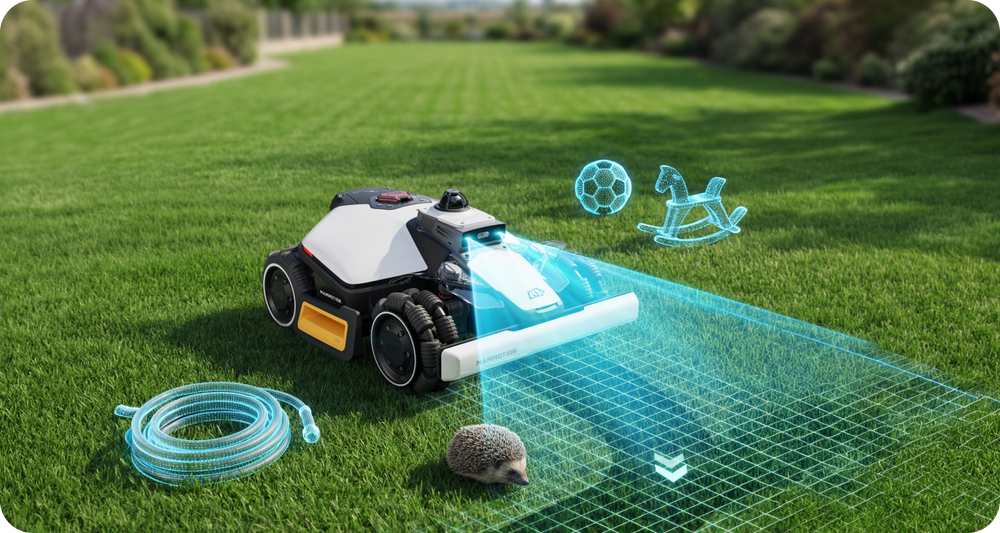
In the UK, gardens are often highly “lived-in” spaces, shared with pets, children’s football goals, and low-hanging fruit tree branches. Older models rely heavily on physical bump sensors, reacting only after making contact with obstacles.
By contrast, the latest generation of robot mowers uses AI-powered technology to detect and recognise obstacles before any collision occurs. A high-quality 4WD robot mower should be capable of distinguishing between different types of obstacles, enabling it to navigate safely—particularly on slopes—while avoiding direct impacts that could lead to tipping over or getting stuck.
Part 3. Best 4x4 Robotic Lawn Mowers in 2026
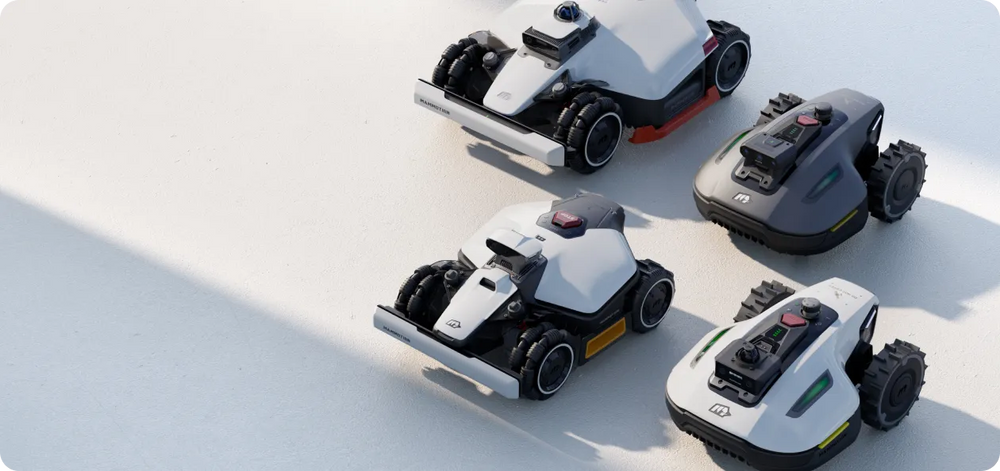
After comparing navigation tech, slope performance, and ease of installation, the Mammotion LUBA 3 AWD 5000 stands out as the best overall choice for 2026. While competitors offer niche benefits.
Quick Icon‑Based Product Comparison
| Feature | Mammotion LUBA 3 AWD 5000 | Lymow One Plus 5A |
|---|---|---|
| Recommended Area | 5000 m² | 4452 m² |
| Price | €3,199 | €2,699 |
| Wire-free/Wire | Wire-free | Wire-free |
| Installation | Easy | Moderate (Need RTK base station) |
| Navigation Tech | 360° LiDAR + NetRTK + AI Vision | RTK + VSLAM |
| Obstacle Avoidance | Advanced AI + Radar + Bumper | Bumper/Vision |
| Drive System | AWD | Tracked Drive |
| Max Slope | 80% (38.6°) | 100% (45°) |
| Cutting Width | 400 mm (Dual Disk) | 400 mm |
| Cutting Height | 25-70 mm | 30-100 mm |
| Cutting Discs | 2 | 2 |
| Battery Capacity | 15 Ah | 15 Ah |
| Weight | 19.3 kg | 35.6 kg |
| Maintenance Cost | Low | Moderate |
| Recommended Rating | ⭐⭐⭐⭐⭐ | ⭐⭐⭐⭐ |
This information is accurate as of 30 March 2025.
1. Mammotion LUBA 3 AWD 5000 – Best Overall Choice

Launched in early 2026, the LUBA 3 AWD 5000 adopts "Tri-Fusion" technology—the strongest positioning system on the market. Developed by Mammotion Atlas Lab, it is the world’s first solution to integrate 360° LiDAR, NetRTK, and AI Vision. This ensures that even under the dense shade of a British oak or against high garden walls, your awd robotic lawn mower maintains precision within ±1 cm.
The LiDAR view acts as the mower's "eyes," capturing millions of laser returns to create a real-time point cloud of your garden, from the grass blades to the tree canopy. Beyond its brains, it is an efficiency beast. With a 400mm cutting width and a 15Ah battery, it tackles large estates with ease. It’s also incredibly "green": the 210W fast charger and "deep sleep" mode can save up to 100 kWh per year, while the smart 80% charge limit keeps the battery healthy for years to come.
The LUBA 3 AWD series won multiple awards at CES 2026 and received extensive positive coverage from leading media outlets. In addition, the LUBA 3 AWD was honoured with the prestigious SEAL Award, a global benchmark in sustainability. Since the award’s inception, it remains the only robotic lawn mower ever to receive the Sustainability Award.
2. Lymow One Plus 5A – Best for Extreme Slopes

The Lymow One Plus 5A is a rugged beast designed for sheer climbing power. Its tracked drive allows it to tackle 100% slopes (45°)—but there is a catch. Tracked vehicles are inherently "aggressive" on turf. When turning, the weight (35.6kg) and the friction of the tracks can "chew up" damp British grass. Furthermore, while it performs remarkably in "Remote Control" mode, its automated performance on slopes over 25° has seen reports of slipping and "ploughing" the soil.
Since its launch, a small number of customers have reported that the Lymow mower may experience issues with charging contacts, track detachment, and wheel hub breakage, which could affect its reliability and maintenance requirements.
Conclusion
If you want the "Ferrari" of the mowing world—fast, smart, and gentle on your lawn—the Mammotion LUBA 3 AWD 5000 is the clear winner for 2026. It removes the two biggest headaches of robotic mowing: boundary wires and getting stuck on hills.
Did you like this article? Add us as a preferred source to find us more easily on Google.