




For many UK homeowners, the garden is more than just an outdoor space; it’s a point of national pride. Whether it’s the dream of achieving those iconic "Wimbledon stripes" or simply having a lush, green carpet for a Sunday BBQ, maintaining a healthy lawn is a cornerstone of British culture.
However, achieving that "perfect" look isn't just about owning a mower—it’s about precision. We often see neighbors struggling with timing, wondering exactly when to start cutting grass after a long, damp winter, or inadvertently damaging their turf by mowing during a frost.
The reality is that British weather is notoriously unpredictable. Knowing when to cut grass for the first time can be the difference between a resilient lawn and one prone to moss and weeds. This guide is designed to remove the guesswork.
We will walk you through the entire lifecycle of UK lawn care, covering the vital first grass cut of the year, the legal time to mow lawn UK regulations to keep your neighbors happy, and how to manage how long to leave new turf before cutting.
Beyond the basics, we’ll explore how modern technology, specifically robot mowers, is revolutionizing the British garden. Instead of spending your precious Saturday afternoons pushing a heavy machine, you can achieve professional results through automation. Whether you are a traditionalist or a tech-enthusiast, this guide provides a month-by-month roadmap to ensure your lawn remains the envy of the neighborhood.
Part 1. The UK Grass Growth Cycle: Timing is Everything
In the UK, our lawns don’t grow at a steady pace year-round. Instead, they follow a distinct double-peak curve. Understanding this cycle is the "secret sauce" to a healthy lawn. If you try to force a strict weekly schedule regardless of the weather, you risk stressing the grass or inviting moss—the arch-nemesis of the British gardener.

Spring (March – May)
This is the "Big Awakening." The surge in nitrogen and rising light levels means the grass will grow rapidly.
Summer (June – August)
Growth often plateaus. If we hit a classic British heatwave (and the inevitable hosepipe bans), the grass may go dormant to protect itself.
Autumn (September – November)
With the return of rain and lingering soil warmth, there is a second growth spurt. This is a critical time to strengthen the roots before winter.
Winter (December – February)
Growth largely stops. This is the time for mower maintenance and letting the soil rest.
|
Season |
Growth Rate |
|
Early Spring |
Slow but starting |
|
Late Spring |
Very High (Peak) |
|
Summer |
Moderate / Low |
|
Autumn |
Moderate |
|
Winter |
Dormant |
Part 2. When to Cut Grass: When Exactly Are the First & Last Cuts?
When is the best time to cut your lawn for the first and last time? In the UK, the mowing season typically spans from March to October. You should aim for the first grass cut of the year in mid-March once the grass reaches about 5–8cm and the soil is dry. Conversely, the last cut of grass for year usually occurs in late October or early November, just before the first hard frost hits and the grass enters its winter dormancy.
Spring: When to Cut Grass First Time in Spring?
Timing the first grass cut of the year is a bit of a ritual for British gardeners, often coinciding with the first dry weekend after the spring equinox. However, don't just rush out because the sun is shining. You need to ensure the "Big Three" conditions are met:
- No Frost: Never mow if there is a frost forecast or if the ground is frozen; this will shatter the grass blades.
- Dry Soil: If your boots leave a muddy print (the "Squelch Test"), it’s too wet. Mowing wet soil leads to compaction and bald patches.
- Height: The grass should be at least 5–8cm tall.
Remember the "High-to-Low" strategy. For that initial session, set your mower blades to the highest setting. You only want to tip the top third of the grass. This "gentle wake-up call" encourages lateral growth without shocking the root system after a long winter sleep.
Autumn: When Should You Stop Cutting Grass?
Generally, your last cut of grass for year will happen in late October. However, if the UK is having a particularly mild "Indian Summer," you might find yourself mowing into November.
|
Milestone |
Typical Window (UK) |
Key Checklist |
|
First Cut |
Mid-March / April |
Soil dry, no frost, 1/3 rule. |
|
Peak Season |
May – August |
Weekly/fortnightly maintenance. |
|
Last Cut |
Oct – Early Nov4 |
Before first frost, leave it longer. |
The goal for the final cut is protection. Unlike the summer when you might want a short, velvet finish, the autumn cut should be slightly longer—around 4–5cm. Leaving a bit of length acts as a warm "blanket" for the soil, protecting the delicate crowns of the grass plants from the upcoming winter frosts.
Part 3. When Not to Cut Grass?
You should not cut your grass during frosty or freezing conditions, when the soil is waterlogged, or during a severe summer drought. Mowing under these conditions can lead to "bruising" the grass blades, soil compaction, or even killing off your turf entirely. Knowing when not to cut grass is just as important as knowing when to start.

Frost & Frozen Soil
On a crisp British morning, your grass is brittle. Walking on or mowing frozen grass causes the plant cells to shatter, leading to unsightly black footprints that can take weeks to recover.
Waterlogged Lawns
If the ground feels "spongy" or you see puddles, stay away. Mowing a wet lawn rips the grass rather than cutting it and compacts the soil, suffocating the roots.
Drought Stress
If we experience a heatwave and the grass turns brown, it has gone dormant to survive. Mowing now adds unnecessary stress and removes the shade that the longer blades provide to the soil.
Newly Laid Turf
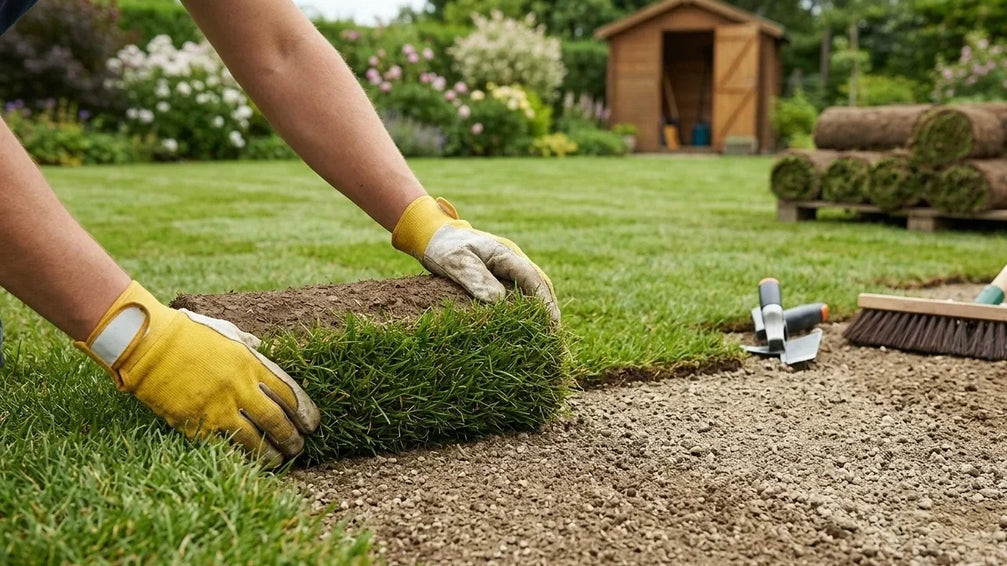
A common question for new homeowners is how long to leave new turf before cutting. You must wait until the roots have firmly established—usually 3 to 4 weeks.
Part 4. How Often Should You Mow Your Lawn and at What Height?

During the peak growing season of spring and summer, you should mow once or twice a week at a height of 2.5cm to 4cm. As growth slows in autumn, reduce this to once every 2 to 3 weeks and raise the cutting height to 4cm to 5cm to give your grass better protection against the upcoming winter cold.
Different Cutting Frequency
In the UK, May is often the month of "surge growth." If you only mow once a fortnight during this time, you'll likely end up cutting off too much of the grass blade, which shocks the plant and turns the tips brown.
Knowing how often cut lawn sections during a typical British summer also requires keeping an eye on the rain. If it’s been a wet week followed by sunshine, your grass will grow at double speed. Conversely, if we have a dry spell, you should leave the mower in the shed.
Customized Height Settings
In the height of summer, a slightly longer lawn (around 4cm) stays greener because the blades shade the soil, reducing water evaporation. When considering the best time to cut lawn heights, always aim higher in the transition months of March and October to ensure the roots remain insulated from the damp UK soil.
|
Season |
Mowing Frequency |
Ideal Cutting Height |
Key Considerations |
|
Spring |
1–2 times per week |
3cm – 4cm |
Gradually lower the height from the first cut. |
|
Summer |
1–2 times per week |
2.5cm – 4cm |
Leave it longer (4cm+) during dry spells. |
|
Autumn |
Every 2–3 weeks |
4cm – 5cm |
Raise the blades to protect against early frosts. |
|
Winter |
Usually None |
/ |
Only mow on a high setting if it's very mild. |
Part 5. What is the Best Time of Day to Cut a Lawn?
The optimal window is between 8 am and 10 am or 4 pm and 6 pm. Mowing mid-morning ensures the early dew has evaporated, preventing clumping, while late afternoon allows the grass to recover before the evening dampness sets in.
Being a good neighbor is a vital part of British suburban life. You don't want to be "that neighbor" who wakes up the whole street on a Sunday morning. While there isn't a single national law that dictates exact minutes, local councils operate under the Environmental Protection Act 1990 regarding noise nuisance. Most UK local authorities recommend following these general "socially acceptable" hours:
|
Day of the Week |
Acceptable Mowing Hours |
Recommendation |
|
Weekdays |
8 am – 8 pm |
Aim for 9 am to avoid the school run chaos. |
|
Saturdays |
9 am – 8 pm |
A slightly later start is appreciated by neighbors. |
|
Sundays / Bank Holidays |
10 am – 4 pm |
Keep it brief; Sunday is traditionally a quiet day. |
Traditional petrol lawn mowers can generate noise levels exceeding 90 decibels, whereas most robotic lawn mowers like Mammotion operate at around 55–70 decibels — roughly equivalent to a quiet conversation. This means you can maintain your lawn at times when a manual mower would be impractical, keeping your grass perfectly trimmed without disturbing your neighbours.
Part 6. Mowing Mastery: How to Handle Different Lawn Scenarios
Turf vs. Seed
A frequent concern for UK homeowners renovating their gardens is how long to leave new turf before cutting. If you mow too early, the mower’s suction can actually lift the unrooted sod, ruining your hard work.
- Newly Laid Turf: Perform the "tug test" (try to lift a corner) after 14 days. If it stays firm, you can perform a very light trim.
- Newly Seeded Lawns: These are even more delicate. Wait until the young blades are about 7cm tall. Use a sharp blade to ensure a clean snip; a dull blade will pull the tiny seedlings straight out of the soil.
Grass Types & Mowing Needs
The "standard" British back garden usually features a mix of species designed to withstand our damp climate. Understanding what's under your feet helps determine when to cut grass for the best health results.
|
Grass Type |
Common Use |
Ideal Height |
Mowing Note |
|
Perennial Ryegrass |
Family lawns & play areas |
3cm – 5cm |
Very tough; can handle frequent mowing. |
|
Fescues |
Ornamental/shady lawns |
1.5cm – 3cm |
Drought tolerant; prefers a slightly higher cut in summer. |
|
Bentgrass |
Golf greens / Luxury lawns |
0.5cm – 1.5cm |
Requires high maintenance and very frequent thin clips. |
Part 7. Common Mistakes That Are Killing Your British Lawn
The biggest lawn killers are scalping (cutting too short), mowing wet grass, and using dull mower blades. These errors lead to weak root systems, disease susceptibility, and an uneven, patchy appearance that invites moss and weeds to take over.
|
Mistake |
Consequence |
Better Alternative |
|
Scalping |
Weed invasion & weak roots |
Set mower height to 3cm or higher. |
|
Mowing Wet |
Fungal diseases & soil damage |
Wait for the "Squelch Test" to pass. |
|
Dull Blades |
Frayed, brown grass tips |
Sharpen blades or use a robot mower. |
|
Irregularity |
Thin, patchy appearance |
Maintain a "little and often" schedule. |
Part 8. Mowing Mastery: Achieving the Iconic Striped UK Lawn
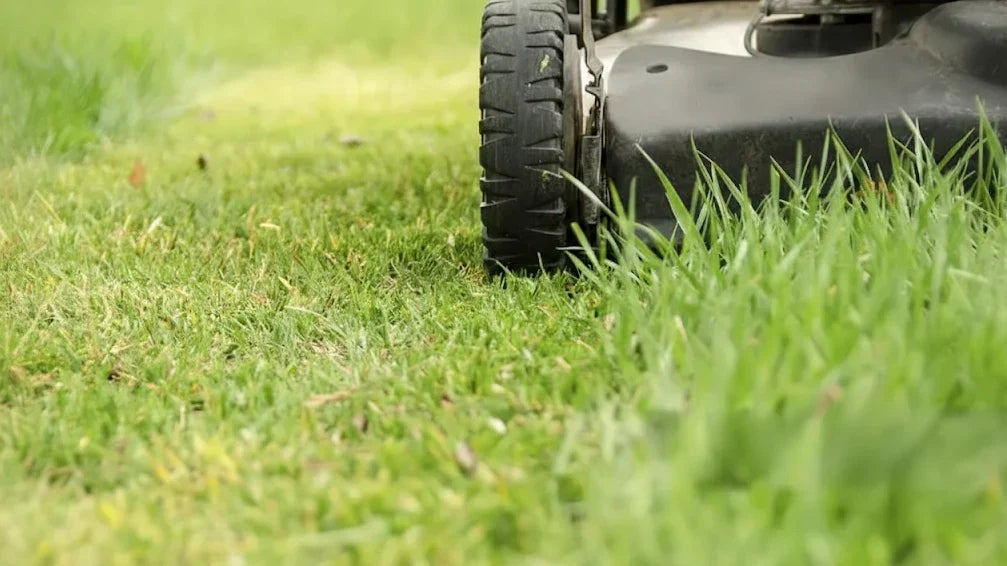
There is perhaps nothing more quintessentially British than a perfectly striped lawn. To achieve this at home, you traditionally need a cylinder mower or a rotary mower with a heavy rear roller. The "stripe" is actually an optical illusion caused by how the light hits the flattened blades. While it looks professional, it can lead to "ruts" if you follow the exact same path every week. To keep your turf healthy, experts recommend alternating your pattern (e.g., North-South one week, East-West the next) to ensure the soil remains aerated.

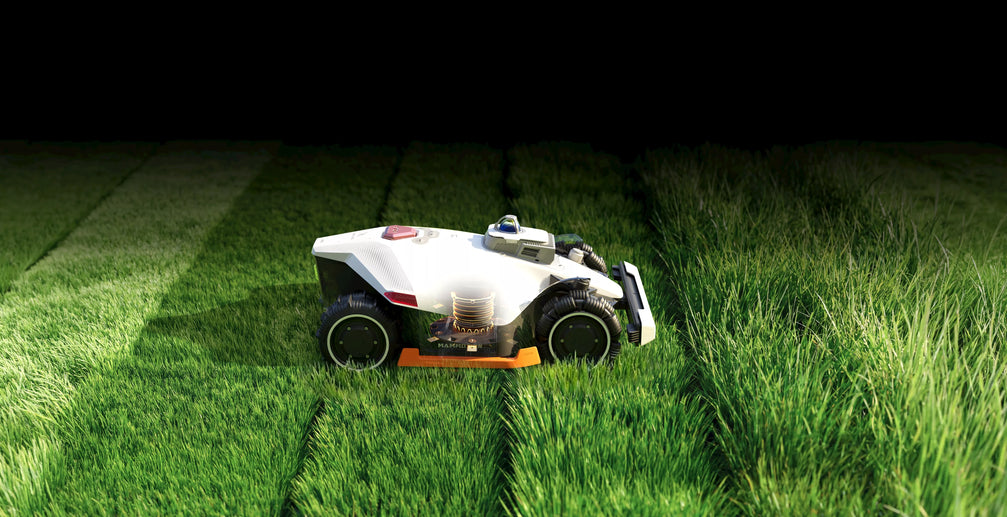
Achieving perfect symmetry manually can be a back-breaking task, requiring a steady hand and a keen eye. This is where high-end technology is changing the game for British enthusiasts. Some modern robots like Mammotion allow you to "print" patterns into your lawn—from classic stripes to diamond grids—all via a smartphone app.
Because these robots use sharp, light blades to create patterns rather than heavy rollers, you get the aesthetic benefit without the risk of soil compaction that often plagues heavy manual mowers.
|
Feature |
Traditional Mower (with Roller) |
Advanced Robot Mower (Mammotion) |
|
Stripe Precision |
Depends on operator skill |
Precise satellite-guided lines |
|
Physical Effort |
High (Heavy machine) |
Zero (Automated) |
|
Soil Impact |
High risk of compaction |
Minimal impact (Lightweight) |
|
Pattern Variety |
Usually limited to stripes |
Stripes, Grids, and Custom Art |
Part 9. Safety and Legal Considerations
To ensure a safe experience, you should always consider safety and legal considerations in the following points:
- Clear stones, branches, and other debris before mowing.
- Check the lawn for hidden hazards.
- Wear sturdy, non-slip footwear, especially on damp ground.
- Keep children and pets away from the area.
- Always switch off and fully disconnect the power before inspecting or cleaning the blades.
- Mow during reasonable daytime hours.
- Avoid very early starts, particularly on Sundays, to prevent disturbing neighbours
Part 10. Choosing the Right Mower for Your Garden
While traditional petrol mowers offer power for very large estates, modern cordless battery and robotic mowers have become the preferred choice for British suburban gardens due to their low noise and ease of maintenance.
Factors to Consider Before Buying
With the vast array of options available at UK garden centres, making a choice can be overwhelming. Before you decide when to start cutting grass, you need the right tool for the job. Consider these key elements:
1. Lawn Size & Terrain: A small terrace garden in London needs a very different machine than a rolling acre in the Cotswolds.
2. Slopes & Obstacles: If your garden has steep banks or complex flower beds, you need a mower with high traction and manoeuvrability.
3. Power Source: Petrol is powerful but noisy and high-maintenance; electric (corded) is cheap but the cable is a trip hazard; robotic is autonomous and quiet.
|
Mower Type |
Best For |
Pros |
Cons |
|
Manual Push |
Tiny, flat patches |
Zero cost; eco-friendly |
Physically demanding |
|
Electric (Corded) |
Small urban lawns |
Lightweight; affordable |
Tethered by a cable |
|
Petrol Rotary |
Large, rough areas |
Very powerful |
Noisy; high maintenance |
|
Robot Mower |
Most UK gardens |
Fully autonomous; quiet; eco-friendly |
Higher initial cost |
Why Robotic Mowers are Better than Traditional Mowers?

The British gardening landscape is shifting. More homeowners are moving away from the "Saturday afternoon chore" of pushing a heavy machine and choosing automation. Here is why a robot mower is often the superior choice for maintaining a healthy UK lawn:
|
Feature |
Traditional Mowers |
Robotic Mowers (Mammotion) |
|
Maintenance |
High |
Minimal |
|
Noise Level |
90dB+ (Loud) |
55–70dB (Quiet) |
|
Cut Quality |
Risk of "scalping" if neglected |
Continuous precision trimming |
|
User Effort |
High (Pushing/Steering) |
Zero (Set and forget) |
|
Eco-Friendly |
No |
Yes |
While a traditional mower is a one-time low-cost purchase, a robot mower is a long-term investment in your property’s curb appeal and your own free time. By adjusting cutting heights automatically based on the season, a robot mower ensures you are always doing the right thing for your grass type without having to be an expert.
Part 11. The UK Year-Round Lawn Mowing & Care Calendar
To keep a lawn in peak condition, your calendar should focus shifts from growth stimulation in spring to moisture preservation in the heat of summer or even winter.
|
Month |
Mowing Status |
Height |
Essential Maintenance |
|
January |
No Mowing |
/ |
Stay off the grass; clean tools. |
|
February |
No Mowing |
/ |
Order seeds/fertilizer; check for moss. |
|
March |
First Cut |
5–6 cm |
First grass cut of the year; light trim. |
|
April |
Regular |
4 cm |
Scarifying & Aerating; Spring feed. |
|
May |
Weekly |
3 cm |
Weed control; peak growth management. |
|
June–Aug |
1-2x Weekly |
3–5 cm |
Increase height during dry spells; watering. |
|
September |
Weekly |
4 cm |
Overseeding; Autumn feeding. |
|
October |
Final Cut |
5 cm |
Clear fallen leaves; reduce frequency. |
|
November |
Final Cut |
5 cm |
Last cut of grass for year before frost. |
|
December |
Rest Period |
/ |
Winter dormancy; avoid compaction. |
Conclusion
Creating a professional-grade lawn that rivals the grounds of Britain’s finest stately homes is no longer a pipe dream. By following the expert tips outlined above and staying consistent, you can transform your garden into a lush, vibrant sanctuary.
However, we understand that achieving pitch-perfect turf can be a complex and time-consuming task. If you’d prefer to spend your weekends relaxing rather than mowing, Mammotion robotic mowers are the ultimate solution. Whether you are a busy professional short on time or a discerning horticulturist, Mammotion delivers a flawless finish that exceeds expectations, ensuring your garden remains the envy of the neighborhood.