




Whether you’ve spotted a few scattered caps or the dreaded circular patterns of fairy rings in your lawn, these fungal growths can quickly disrupt the uniform look of your outdoor space.
While many homeowners worry that their grass is dying, the truth is often the opposite: mushrooms usually signal that your soil is rich in organic life. However, they become an eyesore or a concern for pets.
In this guide, we will dive into professional-grade lawn fungus removal strategies tailored for the UK climate, helping you understand why they appear and how to implement a long-term fungal treatment for grass that actually works.
Part 1. What is Lawn Fungus and How to Identify it?
Understanding lawn fungus is the first step toward effective lawn fungus removal. Essentially, what we see on the surface—the mushrooms or patches—is just the "fruiting body" of a much larger underground network called mycelium. These fungi live in your soil year-round, breaking down organic matter. They only become visible when environmental conditions (usually a mix of humidity and warmth) trigger them to sprout.
To identify if your garden requires a fungus treatment, look for the following tell-tale signs:
- Visible Spouts: The most obvious sign is the appearance of various caps, stems, or "toadstools" scattered across the turf.
- Discoloured Patches: Keep an eye out for circular or irregular brown, yellow, or straw-coloured spots that don't green up with watering.
- Textural Changes: Some fungi appear as slimy coatings, powdery white dust (mildew), or even fine, thread-like pink strands.
- Ring Formations: Dark green circles or rings of dead grass often indicate that fungi are active beneath the surface.
- Spore Clouds: If you walk across the lawn and notice a fine "dust" kicking up, you likely have an active fungal colony releasing spores.
- Identifying these symptoms early allows you to apply a fungal treatment for grass before the root system is compromised, saving you time and money on lawn renovations.
Part 2. Common Types of Lawn Fungus in the UK

The British climate—notoriously damp and mild—is a breeding ground for specific types of fungi. Identifying exactly what is growing in your garden is crucial for choosing the right fungal treatment for lawns.
Mushrooms / Toadstools
These are the most common "uninvited guests" in UK gardens. Often appearing after a heavy downpour, they thrive on decaying tree roots or old mulch buried under the soil. It's important to remember that these are often a sign of healthy, organic-rich soil, though they can be unsightly.
Fairy Rings
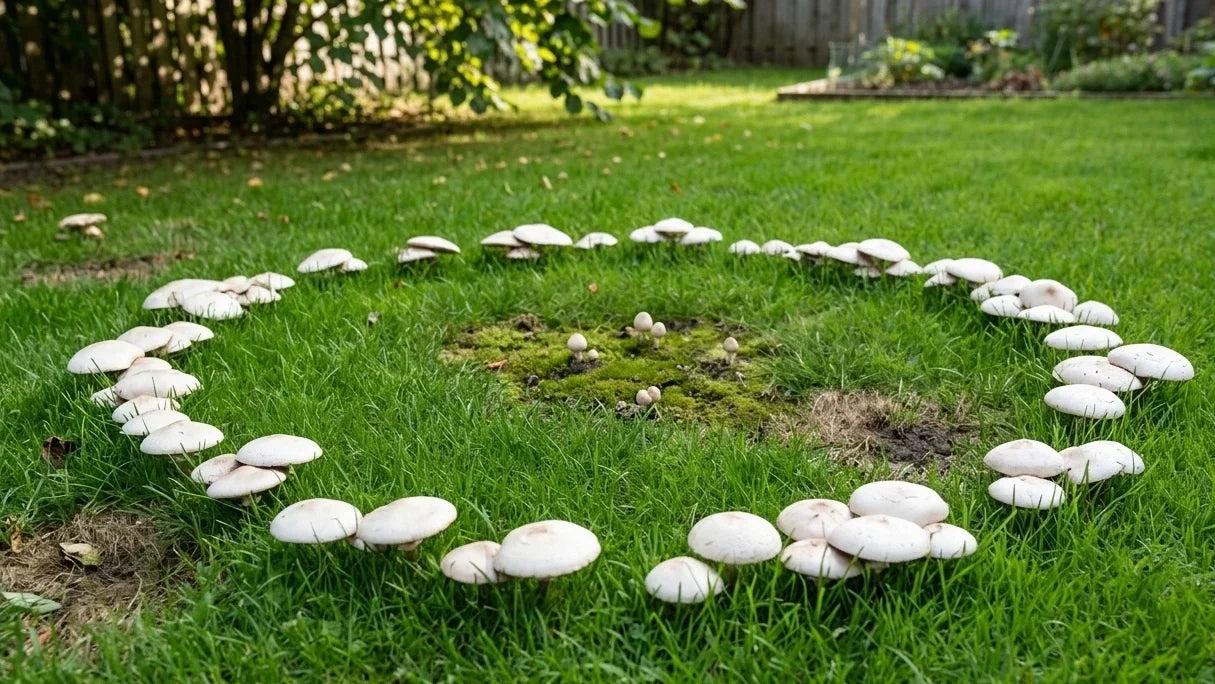
Fairy rings in lawn areas are perhaps the most distinctive fungal pattern. They manifest as either a ring of dark green, fast-growing grass or a circle of dead turf with mushrooms sprouting along the perimeter. It indicates an underground fungal mat that is preventing water from reaching the grass roots.
Red Thread
If your lawn looks like it’s been covered in pinkish-red candy floss, you’re likely dealing with Red Thread. This is incredibly common in the UK during late summer and autumn when nitrogen levels in the soil drop. While it rarely kills the grass entirely, it makes the lawn look ragged and diseased, requiring a nitrogen-rich fungus treatment.
Dollar Spot
This fungus creates small, silver-dollar-sized circles of bleached-out grass. It’s particularly prevalent on closely mown lawns during humid weather. If left unchecked, these small spots can merge into large, unsightly scorched patches.
Snow Mold
Often discovered in early spring as the snow melts (or after a particularly frosty British winter), Snow Mold appears as greyish-white or pinkish crusty patches. It thrives under cover, whether that’s actual snow or a thick layer of fallen leaves left on the lawn over winter.
Part 3. What Causes Fungus in Lawns?
Most lawn fungi develop when grass stays damp, shaded, or stressed for extended periods. In the UK’s moist climate, several environmental factors can create ideal conditions for fungal growth.
1. Excess Moisture
Fungi thrive in wet conditions. Frequent rain, overwatering, or watering late in the evening can leave grass blades damp overnight, allowing fungal spores to spread quickly.
2. Poor Drainage
In gardens with heavy clay soil, water often remains near the surface instead of draining away. This waterlogged environment weakens grass roots and encourages fungal growth, including fairy rings in lawn areas.
3. Decaying Organic Matter
Fungi naturally break down organic material. Buried tree roots, old stumps, wood debris, or decomposing organic matter beneath the turf can trigger mushrooms or toadstools to appear on the lawn.
4. Compacted Soil
Frequent foot traffic, garden furniture, or heavy equipment can compact the soil. Compaction limits oxygen flow to the roots and stresses the grass, making it more vulnerable to fungal diseases.
5. Thick Thatch Layer
Thatch is the layer of organic debris between the soil and the grass blades. When it becomes too thick (over about 1 cm), it traps moisture and creates an ideal environment for fungi to develop.
6. Lack of Sunlight and Airflow
Shaded lawns or areas surrounded by dense hedges, fences, or trees tend to stay damp longer. Poor airflow and limited sunlight allow fungi to spread more easily.
Sudden mushrooms in your lawn can be alarming, but the actual risk depends on your situation.
Part 4. Are Mushrooms in the Lawn Dangerous?
Sudden mushrooms in your lawn can be alarming, but the actual risk depends on your situation.
Harm to the Grass
Most common lawn mushrooms, like field mushrooms, are harmless and even beneficial—they break down organic matter into nutrients. Exceptions include fairy rings, which can form a water-repelling layer that may dry out and kill grass in affected areas.
Danger to Pets and Children
While many UK lawn mushrooms are safe, some species—such as Amanita or certain small brown mushrooms—can be highly toxic if ingested.If you have curious dogs or toddlers, the safest approach is to remove the mushroom caps immediately.
Need for Immediate Removal
Non-toxic mushrooms not forming fairy rings are mainly an aesthetic issue. Signs of more aggressive fungi, like slime mould or red thread, require prompt attention to prevent spread.
Identifying the type of fungus is essential for choosing the right treatment and avoiding unnecessary chemicals.
Part 5. Effective Lawn Fungus Removal Tips
Once you’ve identified a fungal problem, effective removal means more than clearing visible growth—it requires changing the lawn environment so fungi cannot survive.
Step-by-Step Lawn Fungus Treatment
For common fungal issues like Red Thread or Dollar Spot, follow these steps:
1. Improve Lawn Drainage
If water lingers after rain, the soil is likely compacted. Use a garden fork or powered aerator to create holes, allowing water to drain and oxygen to reach the roots.
2. Aerate the Soil
Hollow-tine aeration breaks up the dense “pan” layer, reducing moisture retention. Aeration is the most effective long-term treatment.
3. Remove Organic Debris
Fungi feed on dead matter. Rake leaves, fallen grass clippings, and old twigs promptly, especially in autumn.
4. Reduce Thatch Buildup
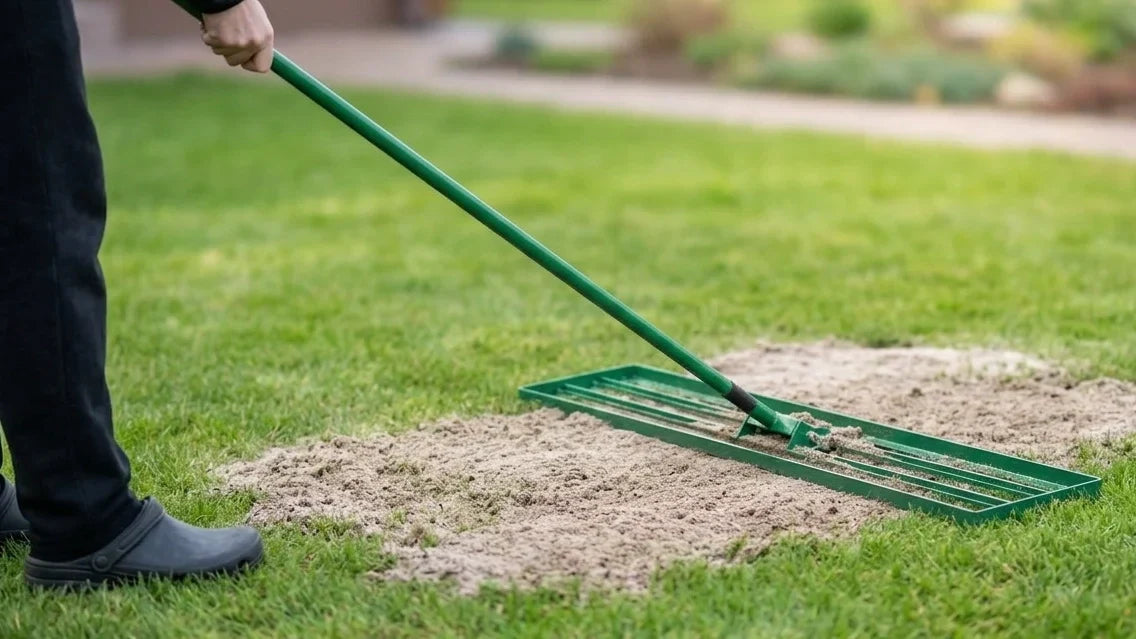
Scarify to remove thick layers of dead grass and moss. Maintaining less than 1 cm of thatch lowers the risk of fungal outbreaks.
How to Get Rid of Mushrooms in Your Lawn?
If your specific issue is the sudden appearance of toadstools, follow these physical removal steps:
|
Method |
Best For |
Why it Works |
|
Manual Picking |
Scattered mushrooms |
Prevents spores from spreading further across the grass. |
|
Raking |
Large clusters |
Quickly clears the surface but requires immediate disposal of the "heads." |
|
Root Excavation |
Recurring clusters |
Removes the buried wood or stump that the fungus is feeding on. |
|
Nitrogen Boost |
General prevention |
Speeds up the decomposition of organic matter, leaving no food for fungi. |
1. Pick or Rake Visible Mushrooms
Remove mushrooms as soon as they appear, ideally before the caps release spores. Wear gloves and bag them immediately—do not compost.
2. Remove Buried Organic Matter
If mushrooms keep returning in the same spot, dig down to check for rotting roots or old timber. Eliminating this “food source” is the only way to prevent regrowth.
3. Improve Airflow and Sunlight
Prune overhanging shrubs and trees to let more light reach the lawn. Sunlight and air circulation help dry the grass surface, making it less hospitable to fungi.
4. Adjust Watering Habits
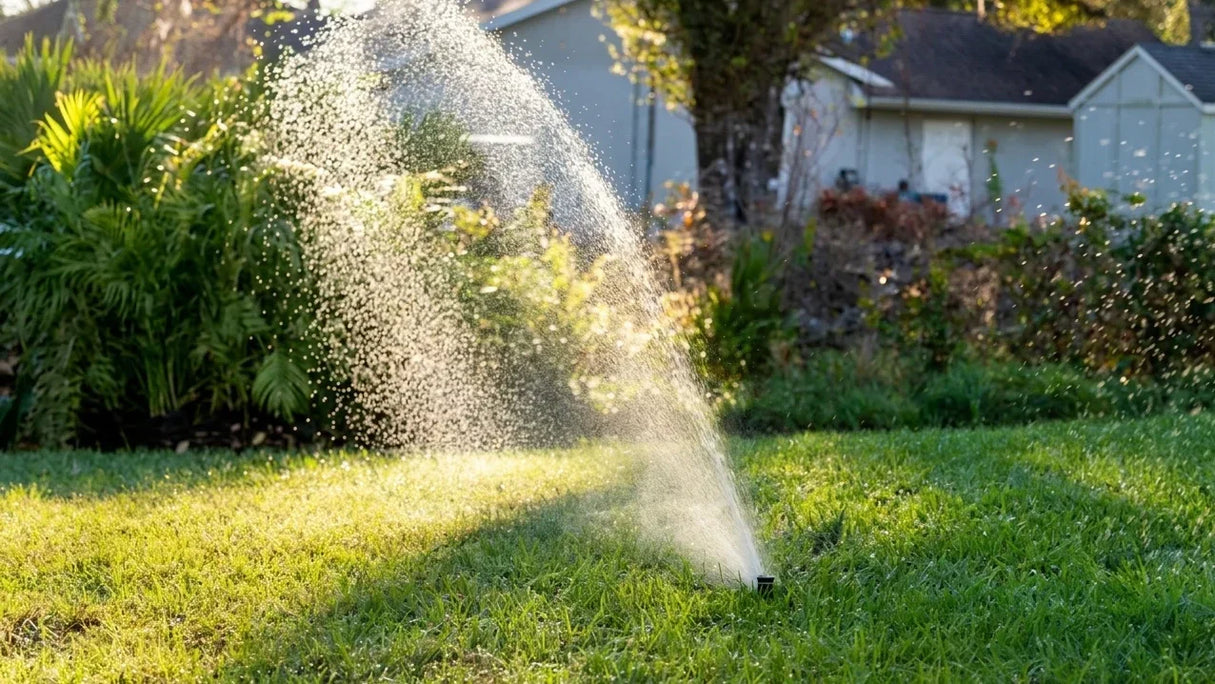
Water in the early morning so grass blades dry during the day. Avoid night-time watering, which encourages fungal growth and increases the need for lawn fungus treatment.
Part 6. How to Prevent Lawn Fungus from Returning
Preventing fungal outbreaks is easier than fixing them. By maintaining a healthy lawn environment, you can stop mushrooms, fairy rings, and other fungi from coming back. Follow these key steps:
Mow Regularly and Correctly
Keep grass at a consistent height. Avoid cutting it too short, which stresses the lawn, and never remove more than one-third of the blade at a time. Using robot lawn mowers will be a good choice for those busy people to care for their healthy lawn.
Improve Soil Drainage
Aerate compacted soil annually to allow water and oxygen to reach the roots. Consider adding sand to heavy clay soil to improve drainage.
Reduce Thatch Build-Up
Scarify the lawn to remove excess thatch and moss. A thatch layer under 1 cm reduces moisture retention and limits fungal growth.
Adjust Watering Habits
Water in the early morning and avoid overwatering. Well-timed watering helps grass dry quickly, preventing the damp conditions fungi love.
Enhance Sunlight and Airflow
Prune overhanging trees and shrubs to increase light and air circulation. Fungi thrive in shaded, stagnant areas, so keeping your lawn airy helps prevent outbreaks.
Remove Debris Promptly
Rake leaves, fallen grass clippings, and other organic matter regularly. This reduces food sources for fungi and keeps your lawn clean.
Feed Your Lawn Appropriately
Use a balanced fertilizer to maintain strong, healthy grass. Healthy lawns are naturally more resistant to fungal diseases.
Part 7. How Robot Lawn Mowers Help Maintain a Healthier Lawn

Upgrading to a Mammotion robotic mower can make a big difference in preventing lawn fungus and maintaining long-term turf health. Advanced mowing technology helps create an environment that is hostile to fungal growth:
Maintain Consistent Grass Height
Fungi thrive in long, damp grass. Mammotion models like LUBA and YUKA robot lawn mower series follow a daily schedule, keeping grass at the ideal height. This ensures sunlight reaches the soil and dries moisture before fungal outbreaks can occur.
Produce Fine Mulching Clippings
Traditional mowers leave thick, wet clumps that feed fungi like fairy rings. Mammotion precision blades create micro-clippings that decompose quickly, returning nutrients without creating a thick thatch layer.
Reduce Lawn Stress
Heavy petrol mowers can compact soil and damage turf, making it more vulnerable to fungal pathogens. Mammotion’s lightweight, all-wheel-drive design gently trims the grass while preserving turf integrity and natural disease resistance.
Promote Better Airflow
Regular trimming prevents overgrown grass, improving air circulation at the base of the blades. This naturally reduces moisture and fungal risk 24/7 without chemicals.
Conclusion
Mushrooms and fungal patches are often a sign of soil and moisture conditions, not just “bad luck.” By improving drainage, maintaining proper grass height, and using a Mammotion robotic mower, you create a resilient, vibrant lawn. The best fungal treatment is proactive maintenance—keeping your turf dry, healthy, and precisely trimmed every day.
FAQs
1. Are the mushrooms in my grass a sign of a dying lawn?
Not necessarily. In most cases, mushrooms indicate that your soil is rich in organic matter. However, if they are accompanied by thinning grass or yellow patches, you may need to investigate lawn fungus removal options to address underlying drainage or thatch issues.
2. Can I just mow over mushrooms to get rid of them?
Yes, you can mow over them, but it is a temporary solution. While it improves the look of the lawn, it doesn't solve the underground problem. For a permanent fungus treatment, you must address the moisture and decaying wood that the mushrooms are feeding on.
3. Will vinegar or dish soap work as a fungal treatment for lawns?
While some DIY "hacks" suggest vinegar, it is often too acidic and can kill the surrounding healthy grass. It’s better to use professional fungal treatment for grass products or focus on cultural controls like aeration and scarification to get rid of mushrooms in your grass safely.
Did you like this article? Add us as a preferred source to find us more easily on Google.