







Water is arguably the most critical element in maintaining a lush, velvet-like carpet in your garden, yet it is often the most misunderstood. Many homeowners across the UK find themselves caught between two extremes: either overwatering during a brief heatwave or completely neglecting their lawn watering duties when the "British summer" turns grey.
Achieving that perfect balance is a science that depends heavily on your specific soil composition, local weather patterns, and even your grass species.
However, hydration is only one half of the story. Proper moisture levels work best when combined with smart maintenance habits, such as professional-grade mowing practices. By understanding when to water the lawn and how it interacts with your mowing height, you can develop a resilient turf that stays green.
Part 1. Signs Your Lawn Needs Water

Even in the relatively damp UK climate, a few days of direct sun can quickly stress your turf. Knowing the early warning signs is the difference between a quick recovery and a patchy, brown garden. You should look for these physical changes before the grass actually dies back:
- Colour shift: The vibrant emerald green dulls into a bluish-grey or dull green tint.
- The "Footprint Test": Walk across the grass; if the blades stay flat rather than springing back, the internal water pressure (turgor) is low.
- Curling blades: To protect themselves from evaporation, grass blades will often roll or fold inward to reduce their surface area.
- Dry soil texture: If you can’t easily push a screwdriver into the ground, it's a clear sign you need more water for lawn health.
Part 2. Signs of Overwatering

In the UK, overwatering is actually a more common mistake than underwatering, often leading to a "spongy" lawn that invites pests. Because many British gardens sit on heavy clay, poor drainage can turn your yard into a bog.
- Spongy or mushy feel: If the ground feels bouncy or squelches underfoot long after the rain has stopped, you are likely over-applying water the yard.
- Yellowing grass: Ironically, too much water drowns the roots, preventing them from absorbing nutrients and turning the grass a sickly yellow.
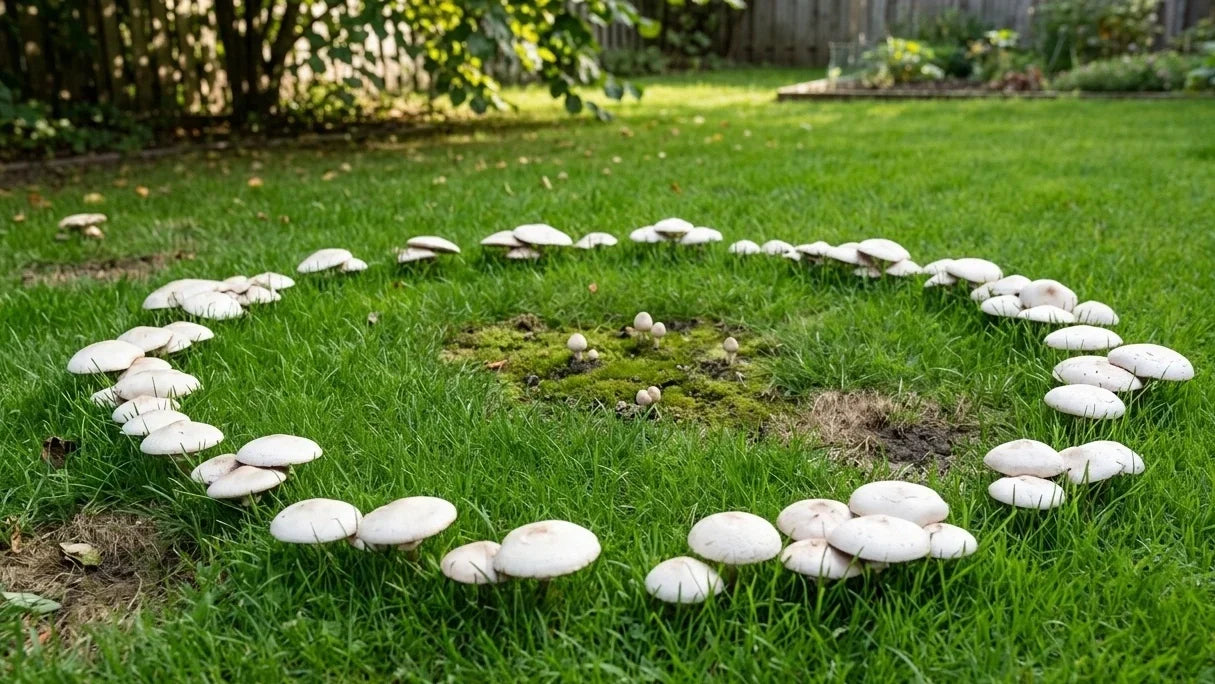
- Fungal outbreaks: Look for "Red Thread" or mushrooms popping up; these thrive in the constant humidity of overwatered turf.
- Heavy moss growth: Moss loves damp, compacted, and shaded areas. If your lawn is becoming a moss carpet, you are likely providing too much watering for grass.
- Runoff: If water is pooling on the surface or running off into the flower beds, the soil has reached its saturation point.
Part 3. How Often Should You Water Grass?
In the UK, the "little and often" approach is a common pitfall. To build a resilient, drought-resistant lawn, watering for grass should follow a strategy of deep, infrequent soaking. This encourages roots to dive deeper into the soil in search of moisture, rather than staying near the surface where they are vulnerable to the mid-day sun.
For most established British lawns, watering 2–3 times per week is the ideal frequency. However, this is not a "set and forget" rule. Your specific schedule depends on several environmental factors:
Soil Type (The Clay vs. Sand Factor)
Much of the UK, particularly in the South East, sits on heavy clay. Clay retains water well but drains slowly, meaning you may only need to water the yard twice a week. If you’re in a coastal or sandy area, moisture drains rapidly, and you might need to sprinkle lawn areas more frequently.
Climate and Rainfall
Always check the local BBC Weather or Met Office forecast. If it has rained significantly in the last 48 hours, skip your scheduled session. Over-saturation leads to anaerobic soil conditions where roots literally suffocate.
Sun Exposure
South-facing gardens or areas without shade from fences and trees will naturally require more water for lawn health than shaded corners.
Part 4. How Much Water Does Grass Need?
To maintain a thriving garden, most UK turf varieties—such as Perennial Ryegrass or Fescue—require approximately 1 to 1.5 inches (25–38mm) of water per week. This figure includes both natural rainfall and supplemental lawn watering.
The goal is to ensure that the water penetrates at least 6 inches (15cm) into the soil. This depth is vital for building a drought-resistant root system. If you only provide a light sprinkle lawn treatment daily, the water never reaches the lower roots, leading to a shallow, weak lawn that browns the moment a "heatwave" hits the UK.
|
Soil Type |
Weekly Water Goal |
Watering Style |
|
Heavy Clay (Common in SE England) |
1 inch |
One deep session; absorbs slowly. |
|
Sandy Soil (Coastal/Heathlands) |
1.5 inches |
Split into two sessions; drains fast. |
|
Loam (The Ideal Garden Soil) |
1.25 inches |
One or two sessions. |
Part 5. How Long to Water the Lawn?
The most common question we hear is: "I have the sprinkler on, but how long is enough?" Unfortunately, there is no universal timer setting because water pressure and sprinkler types vary. As a general guideline, most homeowners in the UK should water their lawn for:
- Oscillating sprinklers: about 30–40 minutes
- Rotary sprinklers: around 40–60 minutes
- Hose with spray nozzle: about 20–30 minutes per area
Different soils absorb and retain water differently, which affects how long you should water.
- Sandy soil: Water for shorter sessions (20–30 minutes) but slightly more often.
- Clay soil: Water more slowly for 40–60 minutes to allow the water to soak in without runoff.
- Loamy soil: Usually needs 30–40 minutes of watering.
To find out how long to water lawn areas specifically in your garden, you should perform the "Tuna Can Test":
- Place 3–4 empty tuna cans (or similar flat-bottomed containers) around your lawn.
- Turn on your sprinkler for exactly 15 minutes.
- Measure the depth of water in each can with a ruler and take the average.
- If you have 0.25 inches of water, you know you need 60 minutes of total watering time per week to reach your 1-inch goal.
Using this method ensures you are providing the exact amount of water for lawn health without wasting a drop—a practice that is both environmentally friendly and budget-conscious given UK water rates.
Part 6. Ways to Check Soil Moisture Before Watering
Before you rush to turn on the tap, it is vital to check if your garden actually needs it. Over-saturating the ground is just as damaging as a drought. Here are three simple methods to determine if it’s the best time to sprinkle lawn areas:
The Screwdriver Test
This is the most popular method in the UK. Take a long screwdriver (at least 6 inches) and try to push it into the soil. If it slides in easily, your ground has plenty of moisture. If you meet significant resistance, it’s time to water the yard.
The Soil Squeeze Test
Dig up a small amount of soil from about 2-3 inches down. Squeeze it in your palm. If it crumbles instantly, it’s dry. If it forms a sticky ball that stays together, it’s likely still hydrated (especially common in clay-heavy soils).
Use a Soil Moisture Meter
For tech-loving gardeners, a digital moisture meter provides an instant percentage. This takes the guesswork out of lawn watering and ensures you only use water for lawn maintenance when scientifically necessary.
Part 7. When Is the Best Time to Water the Lawn?
Timing is the difference between water reaching the roots and water simply evaporating into the air.
Morning or Evening?
The absolute best time to water lawn is in the early morning (between 5:00 AM and 9:00 AM). At this time, the air is cool, the wind is calm, and the water has time to soak deep into the soil before the sun rises.
Watering at night can be risky in the UK; if the blades stay wet for 8–10 hours overnight, you are essentially inviting fungal diseases like Red Thread. If you must water later in the day, aim for the late afternoon so the grass has at least an hour to dry before sunset.
|
Time of Day |
Suitability |
Why? |
|
Early Morning |
Best |
Low evaporation, high absorption. |
|
Mid-Day |
Poor |
Water evaporates before reaching roots. |
|
Late Afternoon |
Acceptable |
Good, provided blades dry before dark. |
|
Night |
Risky |
High risk of fungal disease and moss. |
Seasonal Lawn Watering Guide
In the UK, our watering needs shift dramatically with the seasons.
Spring Watering (March - May)
As we enter the spring growing season, the ground is often naturally damp from winter. However, this is the best time to sprinkle lawn areas that are recovering from winter damage. If the spring is dry, a light weekly watering will kickstart growth. Be careful not to overdo it, as the soil is still warming up.
Summer Watering (June - August)
This is the peak period for lawn watering. During heatwaves, your grass may go dormant (turning brown) to protect itself. To keep it green, you must ensure you meet that 1-inch-per-week goal. If "Hosepipe Bans" are in place, focus your limited water on high-traffic areas.
Autumn Watering (September - November)
As temperatures drop, evaporation slows down. You can reduce how often you water the yard. However, if you have recently performed an overseeding or renovation, consistent moisture is vital for the new seeds to take hold.
Winter Watering (December - February)
Generally, you should never need to provide water for lawn health in a British winter. Natural rainfall is more than sufficient, and watering frozen ground can lead to ice damage and root rot.
Part 8. Best Lawn Watering Methods
Choosing the right equipment depends on your garden size and how much time you want to spend on maintenance.

Sprinkler Systems
Oscillating Sprinklers
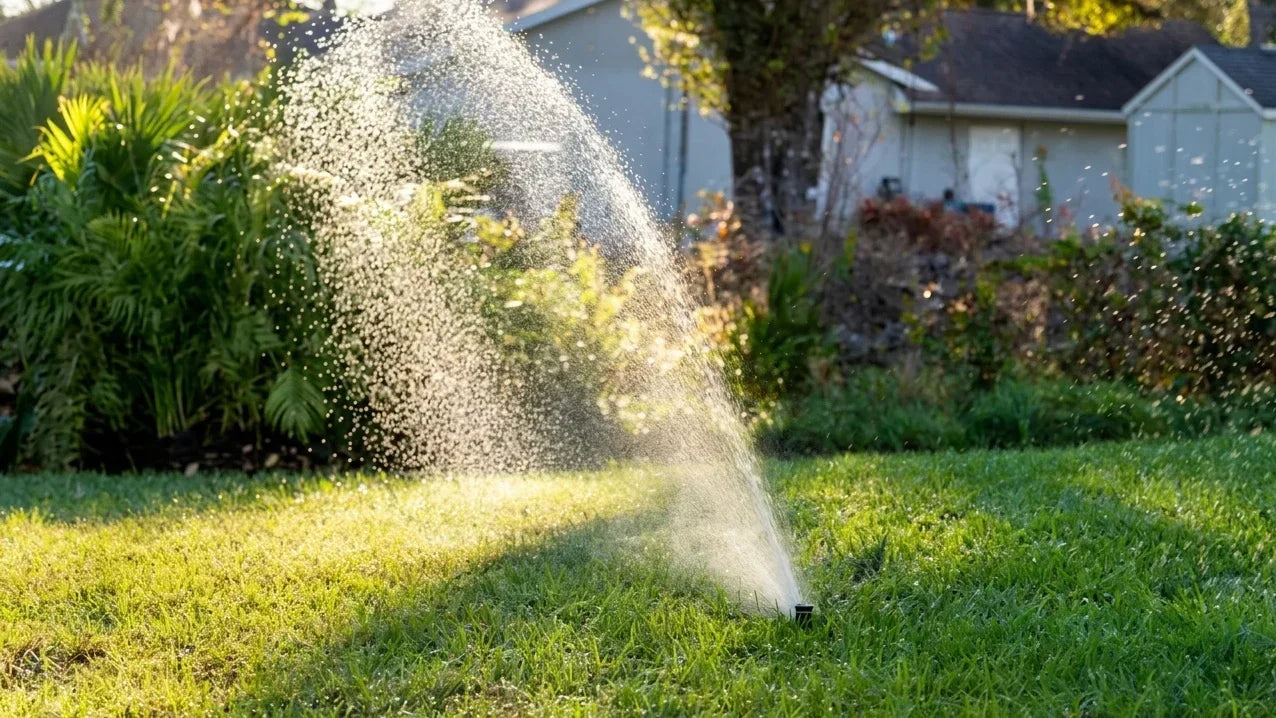
The classic British garden choice. Great for rectangular lawns, providing a gentle "rain" effect that is excellent watering for grass.
Rotary Sprinklers
Best for circular areas; they throw water further and are less affected by wind.
In-ground Irrigation
The gold standard. When paired with a smart timer, it ensures the best time to water the lawn is met every single day without you lifting a finger.
Manual Watering with a Hose
While therapeutic, manual watering is often inconsistent. People tend to move too fast, providing a shallow sprinkling lawn treatment that doesn't reach the roots. If using a hose, spend at least 10–15 minutes on each section.
Smart Irrigation Systems
The future of gardening lies in automation. Smart systems check the local weather forecast and skip sessions if rain is expected.
Part 9. Watering for Lawn After Lawn Care Treatments
Applying treatments is only half the battle; how you water afterwards determines if those nutrients actually reach the roots.
Watering After Scarification
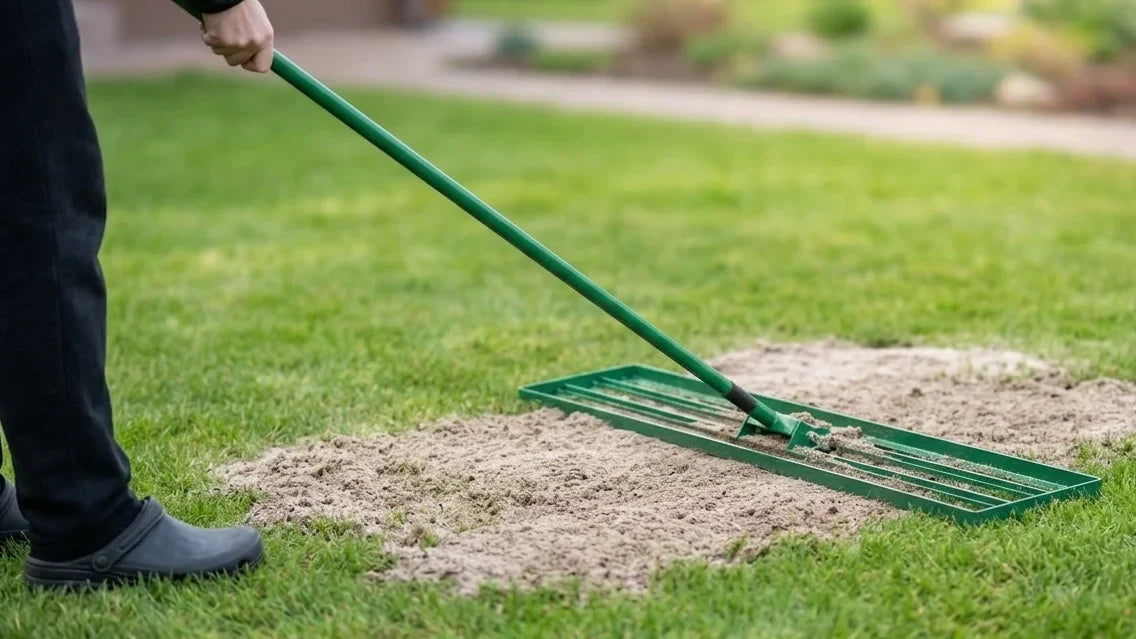
Once you’ve removed the thatch and moss, your lawn is "open" and vulnerable. A deep soaking helps the remaining grass recover from the stress and encourages the soil to settle around exposed roots.
Watering After an Overseed Application
Newly sown seeds need constant moisture to germinate. Instead of one deep soak, you should provide a light sprinkle lawn treatment 1–2 times a day until the sprouts are about 2 inches high.
Watering After a Lawn Renovation
For a full renovation involving top-dressing and fertilising, consistent lawn watering ensures the fertiliser dissolves properly and doesn't "burn" the existing grass blades.
Part 10. How Mowing Affects Lawn Water Retention?

Most UK homeowners don't realise that their mowing habits are the biggest factor in how much water for lawn health they actually need.
When grass is cut too short (scalped), the soil is exposed to the sun and wind, causing moisture to evaporate rapidly. Keeping the grass slightly longer acts like a natural "parasol," shading the soil and keeping it cool.
Standard rotary mowers often tear the grass and take off too much at once, causing "moisture shock." Mammotion robot mowers like the LUBA or YUKA series take a completely different approach that naturally conserves water:
Cut Little and Often
By trimming just a few millimetres every day, the grass never experiences the stress of a heavy cut, which helps it retain its internal water levels.
Maintain Consistent Height
A consistent canopy prevents the "sun-baking" of the soil, meaning you won't need to water the yard as frequently.
Support Mulching
Mammotion mowers are designed to mulch. They chop grass into tiny clippings that fall back into the soil. These clippings are 80-85% water and act as a natural mulch, locking in moisture and returning nutrients to the earth.
Lightweight Design
A lightweight robot mower, such as Mammotion, can be used before or after watering without compacting the soil, allowing water to penetrate more easily down to the grass roots.
Part 11. Common Lawn Watering Mistakes to Avoid
Even with the best intentions, it is easy to fall into habits that do more harm than good. To ensure you are providing the best time to sprinkle lawn care, avoid these common errors:
- Watering too often: Daily shallow watering creates lazy, surface-level roots.
- Watering at night: As mentioned, leaving grass damp overnight in the UK climate is a recipe for Red Thread and fungal rot.
- Shallow watering: If the water doesn't reach 6 inches deep, it’s essentially wasted.
- Ignoring soil drainage: If you have heavy clay and see puddles, stop! Compaction needs aeration, not more water.
- Cutting grass too short: Scalping the lawn during a dry spell increases the need for water for lawn recovery by 50%.
- Watering new grass seed incorrectly: Letting new seed dry out even once can kill the germination process.
Conclusion
From using soil meters to determine the best time to water lawn areas, to employing a Mammotion robot mower that maintains a perfect canopy and recycles moisture through mulching, a healthy lawn has never been easier to achieve.
FAQs
1. Can I water my lawn in full sunshine?
It is not recommended. While the old myth that water droplets "burn" grass like a magnifying glass is mostly false, the evaporation rate is so high that most of the watering for grass will disappear before it hits the roots.
2. How often should you water grass during a UK hosepipe ban?
During a ban, you must prioritise. Use "grey water" (like bath water without heavy chemicals) on high-value areas. This is when the moisture-retention benefits of a Mammotion robot mower and its mulching capabilities become a literal lifesaver for your garden.
3. Is rainwater better than tap water?
Yes. Rainwater is naturally soft and contains slightly more nitrogen, which acts as a tiny boost of fertiliser every time it pours.
Did you like this article? Add us as a preferred source to find us more easily on Google.